
By David Assad - Pittsburgh Post Gazette - 4/6/1989
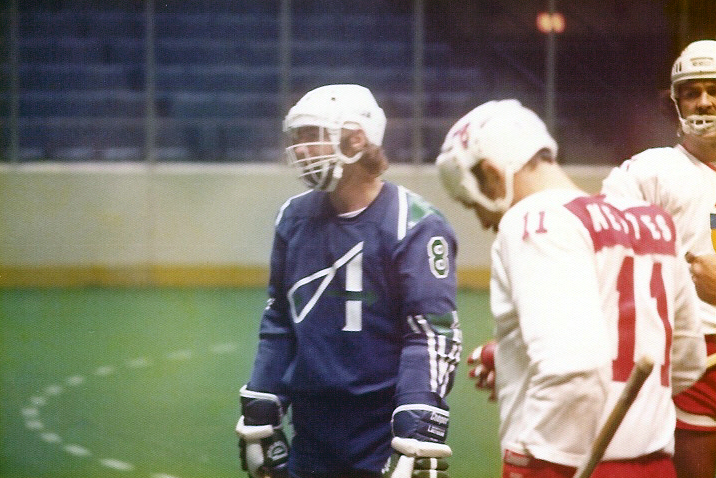
Indoor, or box lacrosse, will debut in Pittsburgh at the Civic Arena on April 22, when two franchises from the Major Indoor Lacrosse League (MILL) meet in a postseason exhibition.
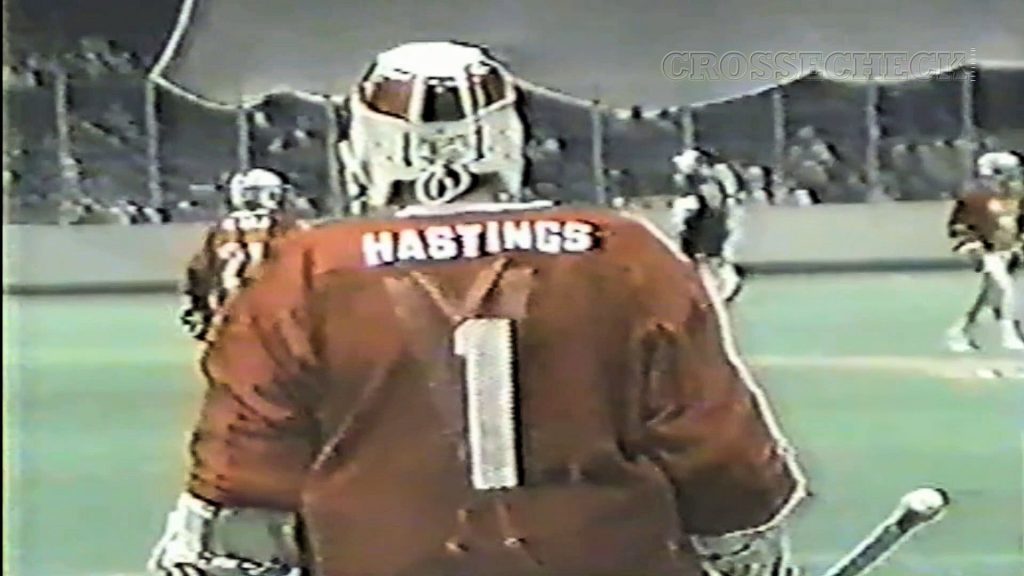
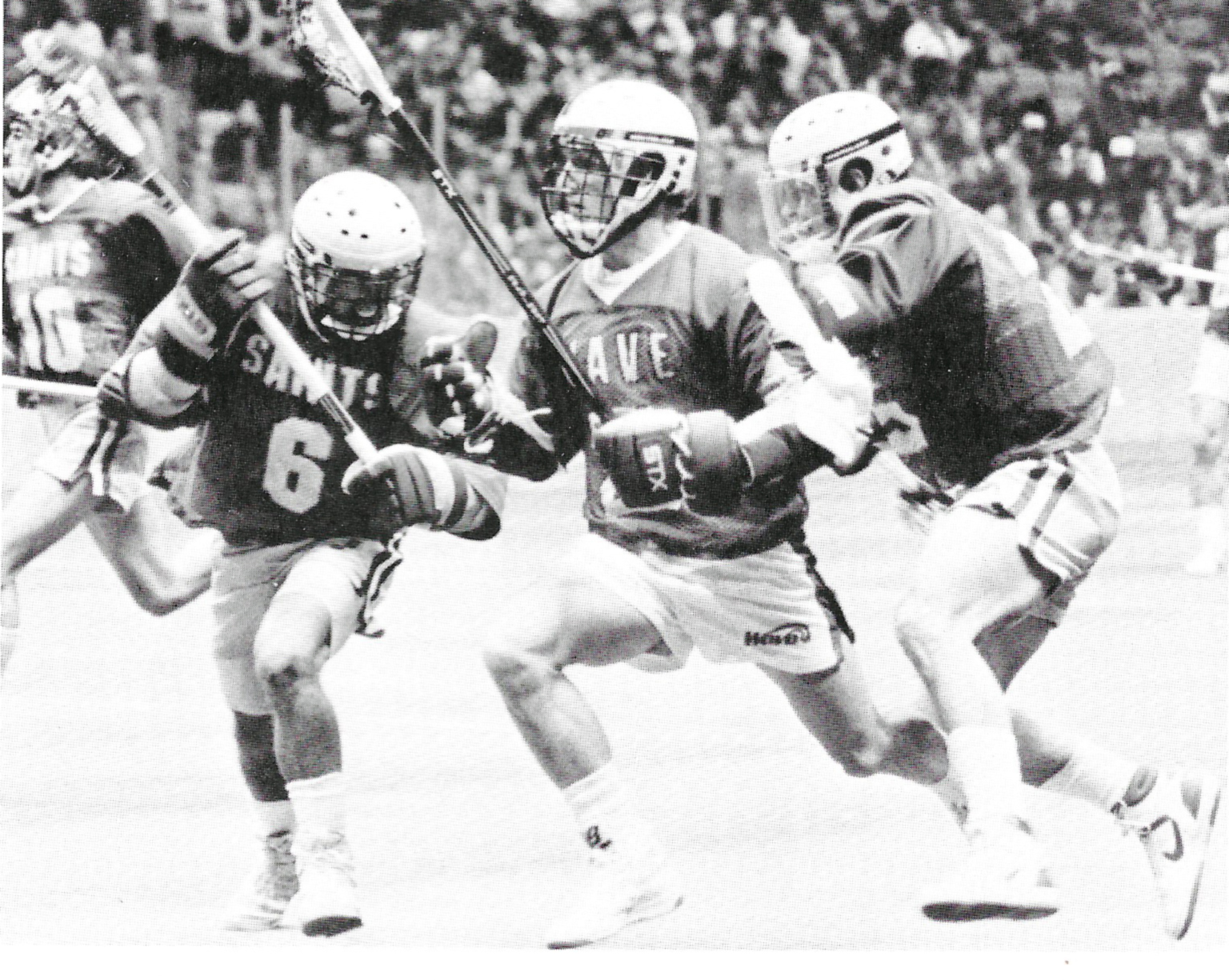
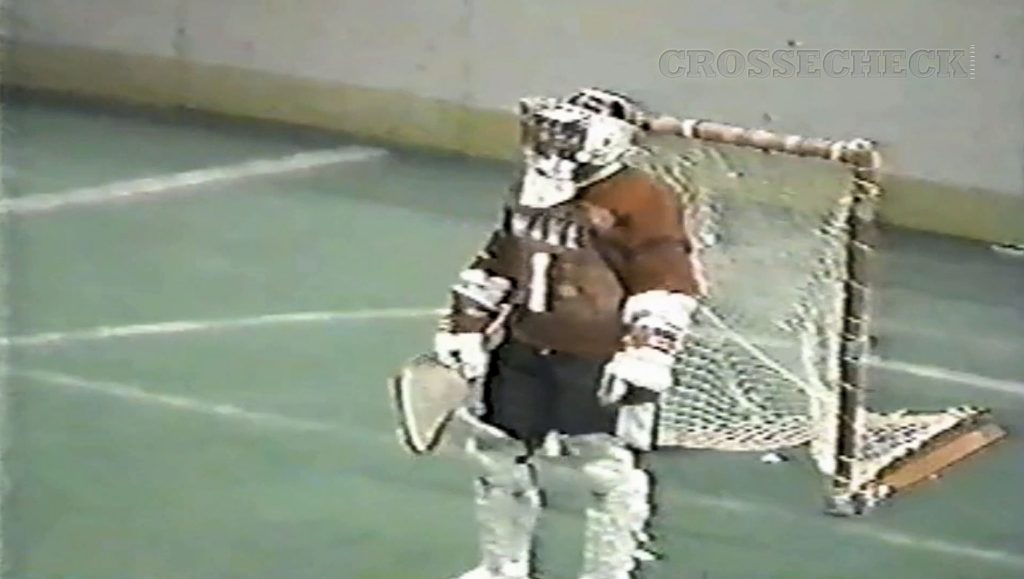
Pittsburgh area sports fans may not be aware of the MILL, but one Pittsburgh native — 1977 Sewickley Academy graduate Tim Hastings — has been the starting goalie of the Washington Wave since the league’s inception in 1986.
Hastings is a former NCAA All-American goaltender, having played at Towson (Md.) State. Most of the players in the six-team league are former outdoor college players from traditional NCAA powers such as Johns Hopkins, Cornell, Virginia, Maryland, Syracuse and North Carolina.
“Indoor lacrosse is a different game than outdoors. It is much rougher, more intense,” said Hastings, who has continued to play outdoors each spring for the Latshaw Lacrosse Club in Baltimore since graduating from Towson State with a business degree.
Most of the MILL players, who compete once a week from January to late March, play in the spring as outdoor amateurs in the U.S. Club Lacrosse Association. Despite his recent professional status indoors, Hastings hasn’t quit his day job. He is a mortgage services manager for a bank in Baltimore.
This past season, three-year veterans in the MILL were paid just $200 a game, according to MILL president Chris Fritz, a Kansas City-based sports promoter. Fritz and partner Russ Cline control the league operations. The MILL is operated much like the Arena Football League.
The six current MILL teams are located in Detroit, Philadelphia, New England, Baltimore, New York and Washington. All six are owned by the promoters. A general manager is hired to operate each franchise and work with the management of each facility where the teams play their respective home games.
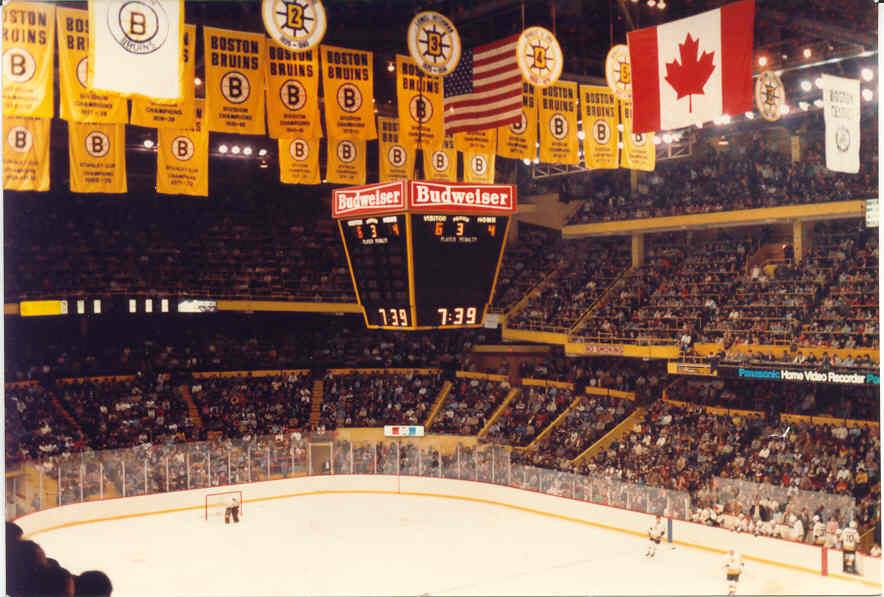
Tomorrow, more than 16,000 fans are expected for the MILL championship game hosted by the Philadelphia Wings at the Spectrum. According to Hastings, the franchises that attract the largest home audiences are based in cities with strong National Hockey League franchises such as Detroit and Philadelphia.
Washington averaged about 6,000 fans during its four home games at the Capital Center in Landover, Md., according to Fritz. “We used to draw better, about 12,000 a game when we were winning last year,” said Hastings, who led Washington to the MILL championship game during the league’s first two years. Last season, the Wave lost to New York, 17-16, in the championship game after finishing first in the 1988 regular-season standings.
This season, Washington was 2-6 during the regular season and did not make the playoffs.
Hastings was quick to point out the teams in the MILL are very evenly matched. He said the difference between a first and sixth place team are minimal. “We won four games by one goal last year,” said Hastings. “Three of them in sudden death (overtime).”
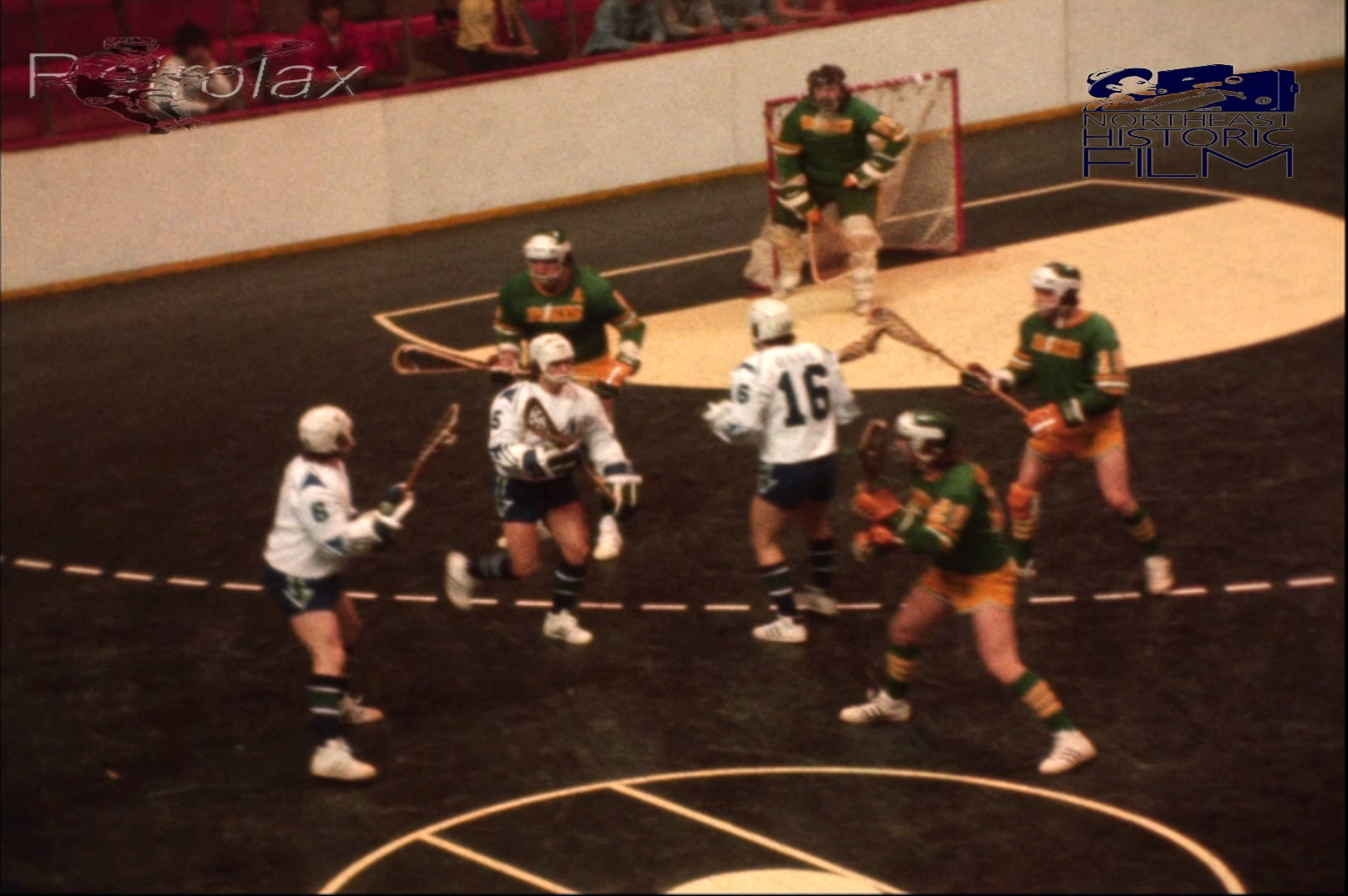
Because indoor lacrosse is played on hockey rink-size surfaces rather than the traditional 110-by-55-yard outdoor field, the number of players has been reduced from 11 to six per side, counting the goalie. “There is a concentrated amount of talent on just these six teams,” said Hastings.
“We’re talking about the best lacrosse players in the world. The competition is really great because everyone is good, just about everyone was a college All-American.”
Detroit is an exception. The Turbos use a lot of Canadians from the Windsor, Ontario, area. According to Fritz, indoor lacrosse originated in Canada. Detroit will play New England at the Civic Arena in two weeks. Both teams were added to the league this year.
“Detroit’s goalie, Ted Sawicki, is by far the best in the league,” said Hastings. “He has 15 years of indoor experience. He’s just awesome. Our attack players might be a little better than the Canadians, but their goalie makes up for it.”
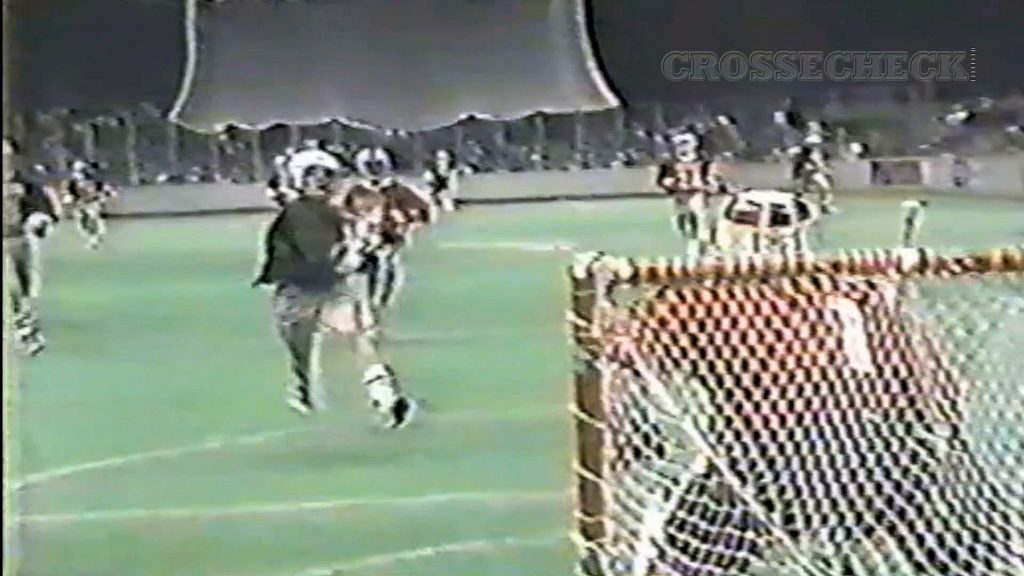
New York defeated Detroit, 9-8, in the first round of the playoffs. New York faces first-place Philadelphia for the championship. The MILL syndicates its television package and is picked up in 40 American markets on 30 different cable systems. Locally, KBL picked up several games last season. According to Tom Rooney, director of marketing for the Civic Arena Corp., the CAA would like to bring an MILL team to Pittsburgh next year.
Fritz said if Pittsburgh draws a five-figure crowd for the exhibition game, a team here next season would be a distinct possibility. Hastings said he would like to play in his home town if Pittsburgh got a franchise. The exposure from cable television has given Hastings a modest degree of celebrity status in the Baltimore/Washington area.
He is often required to sign autographs during special guest appearances at restaurants and malls to promote the team. We was once even asked to sign an autograph while waiting to catch a flight at the Greater Pittsburgh Airport. He attributes that to cable TV exposure.
Hastings is recognized by many lacrosse fanatics despite having to wear about 40 pounds of equipment, something he doesn’t have to do playing outdoors. “The first time I played indoors, I had to have someone show me how to put the equipment on,” said Hastings. “Outdoors, you’re only required to wear a helmet (with a cage) and protective gloves.”
The equipment indoors is much like that of a hockey goalie with padding needed in several places, as well as shin guards. The size of the goal also varies between the indoor and outdoor versions. Outdoors the goal is 6 by 6 feet. Indoors it is only 4 by 4. Indoors the goalie must crouch down and hold his stick one-handed, like hockey netminders; outdoors he stands straight up, holding the stick with both hands.
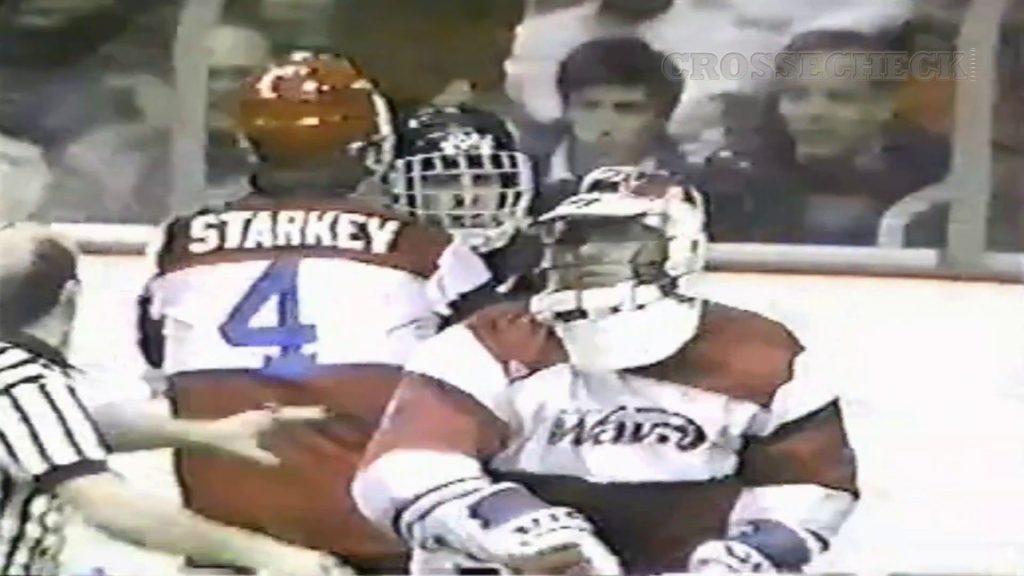
While playing with substantially more equipment and changing his style of play have been two big adjustments for Hastings, his bigger challenge is getting acclimated indoors to the roughness of the sport. “It’s a hard-hitting sport. That’s why the athletes, as well-conditioned as they are, can only play once a week for about eight or nine weeks,” said Fritz.
“It can be brutal out there,” said Hastings. “The ball (six inches in diameter and made of solid rubber) comes at you at about 100 miles an hour and it’s usually shot from closer range than outdoors. The ball outdoors is only going about 80 or 90 miles an hour because the sticks don’t hold the ball as tight.”
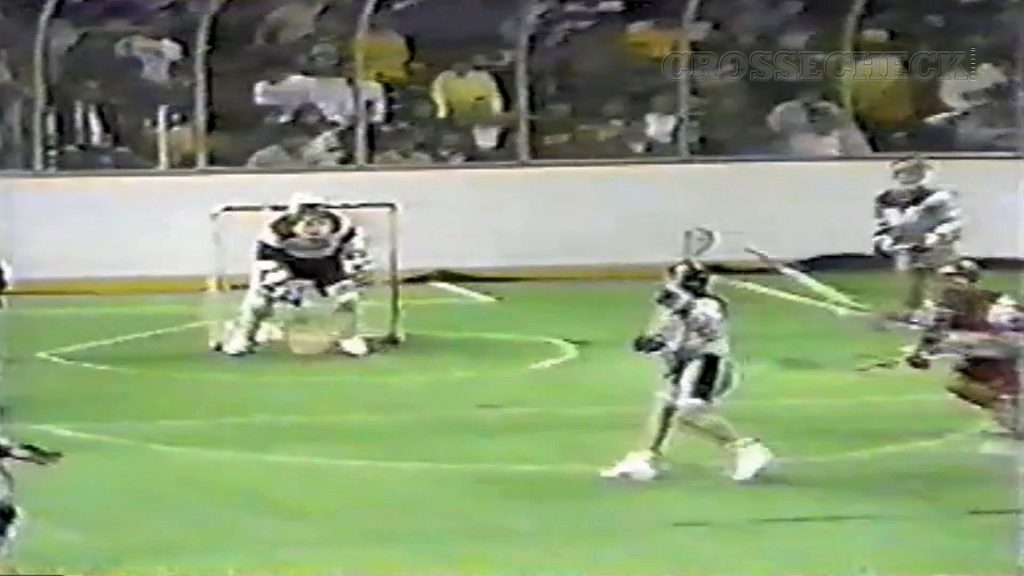
Hastings said he has dislocated his jaw four times in three MILL seasons as well as sustaining other injuries. “I was knocked out in a game last year,” he said. “I was revived on the sidelines and the first thing I thought of was, ‘I’ve got to work (at the bank) tomorrow.'”
The game, divided into four 15-minute quarters, can be as rough as any in professional sports, but Hastings says he enjoys both the indoor and the outdoor versions. “If my body holds up, I’d like to play two or three more years indoors and about five more outdoors,” said the 30-year-old Hastings. Hastings said he plans on returning to Sewickley Academy in late May for the annual Varsity vs. Alumni game.
He said he stays in touch with Sewickley Academy Athletic Director Ridge Diven and recently conducted a clinic for the Sewickley Academy goalies, whose team made its annual playing tour against prep schools in the Baltimore area during the school’s spring break.
“Playing indoors in major league arenas has been a great challenge,” said Hastings. “Being a professional hasn’t changed any one’s lifestyle. It’s not like they’re paying us great salaries, but it can be an ego-builder playing in front of 16,000 in the Spectrum or 12,000 in the Cap Center.
“The mental attitude changes because of the noise level in a place like the Spectrum where the fans are so loud we can’t communicate with each other in calling out defenses. You have to be more alert out there. I enjoy playing both indoors and outdoors. Since I can do both, I don’t feel there is any reason to favor one over the other.
I just love the sport. I want to play at this level as long as I can.” Tim Hastings has played goalie for the Washington Wave of the Major Indoor Lacrosse League since the league’s inception in 1986.