
By WILLIAM N. WALLACE (c) 1974 New York Times News Service
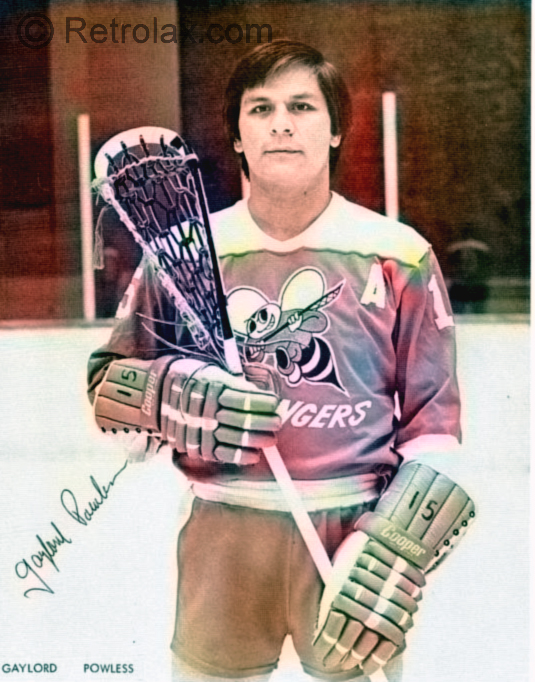
Gaylord Powless, who grew up on the Six Nations Indian reservation near Brantford, Ont., is a professional lacrosse player for the Syracuse Stingers of the new National Lacrosse League.
Woven into the gut of his lacrosse stick are red ribbons as a mark of fortune, like a four-leaf clover.
Other Indians in other times had ribbons on their lacrosse baskets given as a mark of manhood in ceremonies back on the reservation.
In Powless’ case the ribbons have symbolism.
Realize that the North American Indian invented this game some centuries ago. Field lacrosse (11 players) was slowly assimilated into the United States’ culture in the 20th century as an intercollegiate sport.
Box lacrosse (six players) is played by some 250,000 in Canada and called by some Canadians “the national game.”
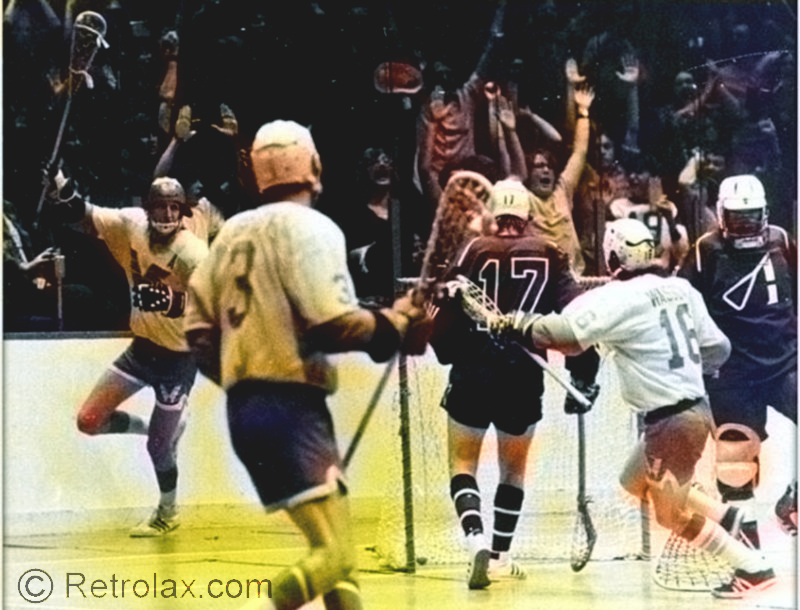
This spring, box lacrosse has made a modest invasion of this continent as another professional league. After three weeks of play, it is a hit in Philadelphia, a moderate success in Baltimore and Montreal, holding its own in Rochester and Syracuse and a disappointment in Toronto.
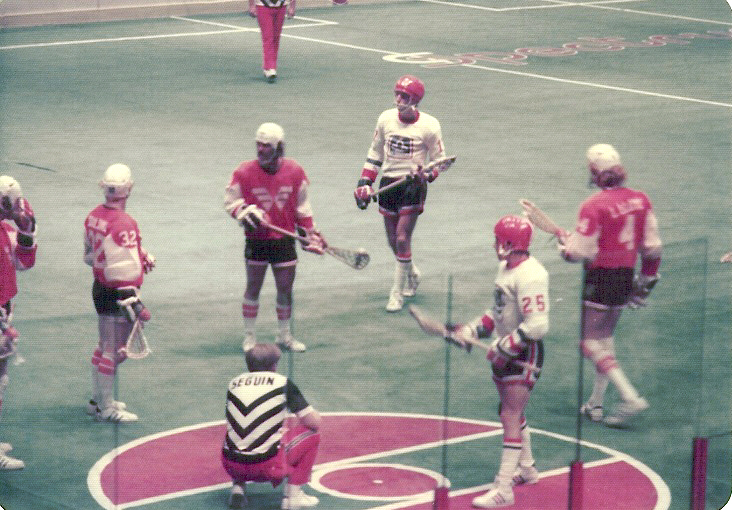
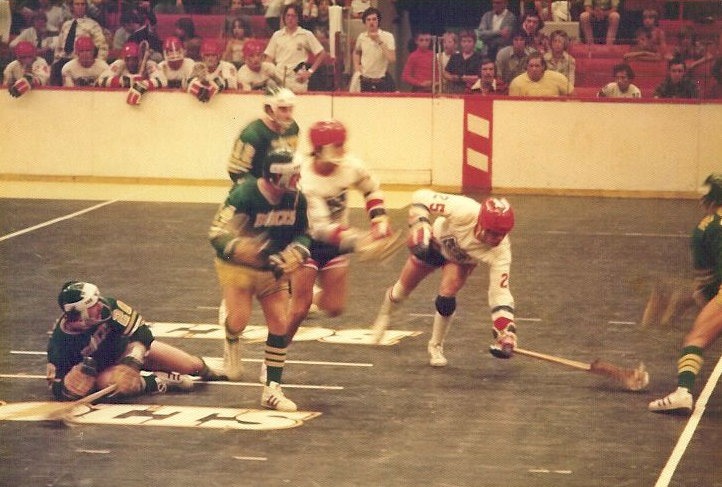
What is box lacrosse? The game would be closest to basketball in that it is played indoors matching six men to a side on a man-to-man basis except for the goal tenders. There is a 30-second rule. (The offensive team must try a shot on goal within 30 seconds or lose possession.)
There is blocking, pick plays fast breaks, all-court press as the rubber ball, eight inches in circumference, moves from one player’s stick to another.
There are three forwards, two defensemen and a goalie roaming over the floor. (One goalie, Merv Marshall, had 17 assists after 11 games.)
There is plenty of contact as in hockey with similar penalties and a penalty box. The games are played on a wood floor the size of a hockey rink and over the pipes that make the ice in winter months.
It is a good spectator game with three periods of 20 minutes each, plus one overtime period of 10 minutes in the event of a tie.
The NHL promotion claims it to be “the fastest game on two feet.”
So how come a handsome young Canadian Indian like Gaylord Powless is playing box lacrosse in Syracuse two nights a week? It is a heritage. His father, Russ, is in the Canadian Sports Hall of Fame and it is a vacation. Gaylord makes about $75 a game.
Powless and the dozen other Indians in the league are in a minority. Caucasian Canadians abound. The league promoters however, hope to bring into the league the best American intercollegiate players from field lacrosse and a draft of those kind of players was set up this month.
If the Americans come in, they will make Indian and Canadian players obsolete. Even National Hockey League players like Doug Favell and Rick Dudley. Why? Because they will be bigger and faster and adapt easily to the close contact of the box game. That is where the box office appeal lies.

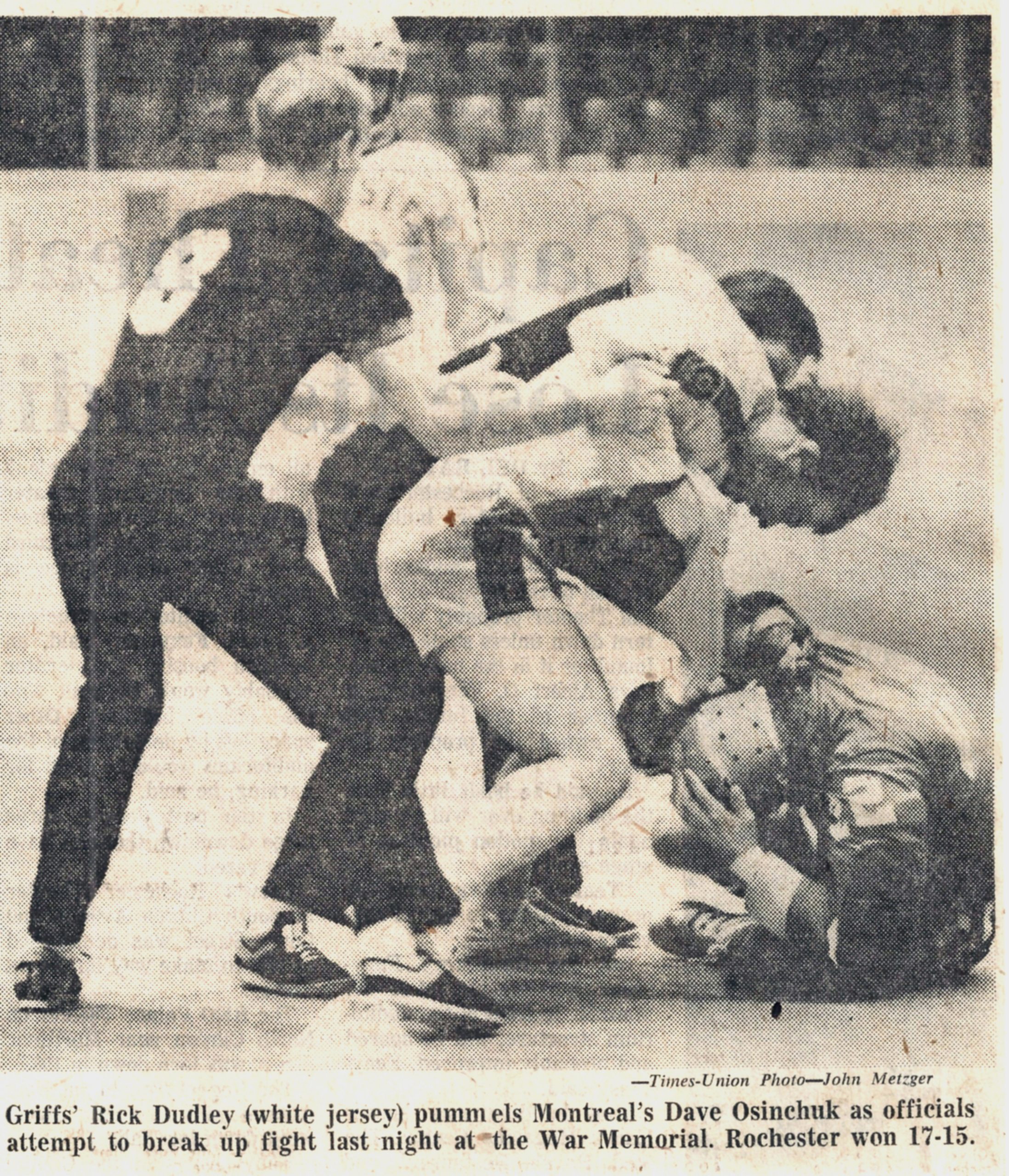
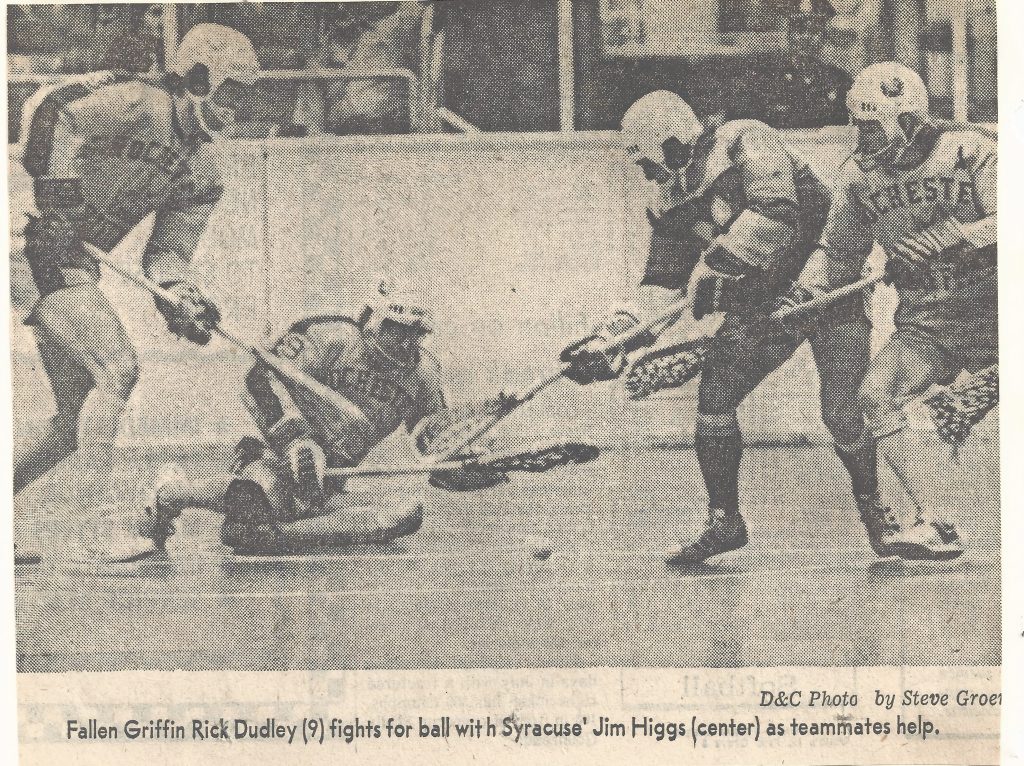
Favell, a goalie for the Toronto Maple Leafs of the NHL, plays forward for the Philadelphia Wings of the NHL, Dudley, of the NHL’s Buffalo Sabres, leads the NLL in scoring for the Rochester Griffins.
Compared to two other new pro leagues, World Team Tennis and the World Football League, the National Lacrosse League has started with reasonable economics and control of expenditures. The budget for the entire league is $3 million for a season running from mid-May to late August. Arena rentals are low. So are the salaries and the risk.
The big money man has been Bruce Norris who owns the Detroit Red Wings of the NHL and Toronto Tomahawks of the NLL. Norris can absorb the losses of the Tomahawks but it is a little different for Dick Wells, a vending machine entrepreneur and president of Syracuse’s Stingers.
Wells hopes to hold on until the sport, long familiar here because of the Indian teams from the nearby Onondaga reservation, “came back.” Crowds have averaged 10,000 in Philadelphia, 9,000 in Montreal; 8,000 in Baltimore; 3,000 in Toronto and 2,600 in Rochester, according to Martin Sears, the league secretary.
“Let’s say everybody is satisfied so far,” he said. The idea is to make some money by exploiting an old game.