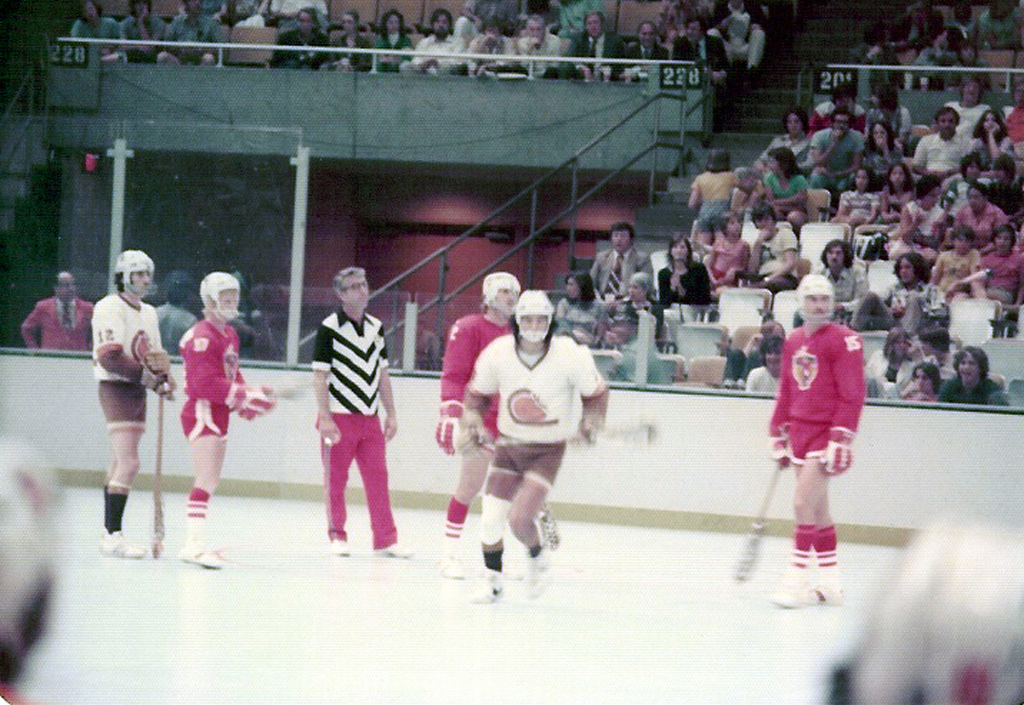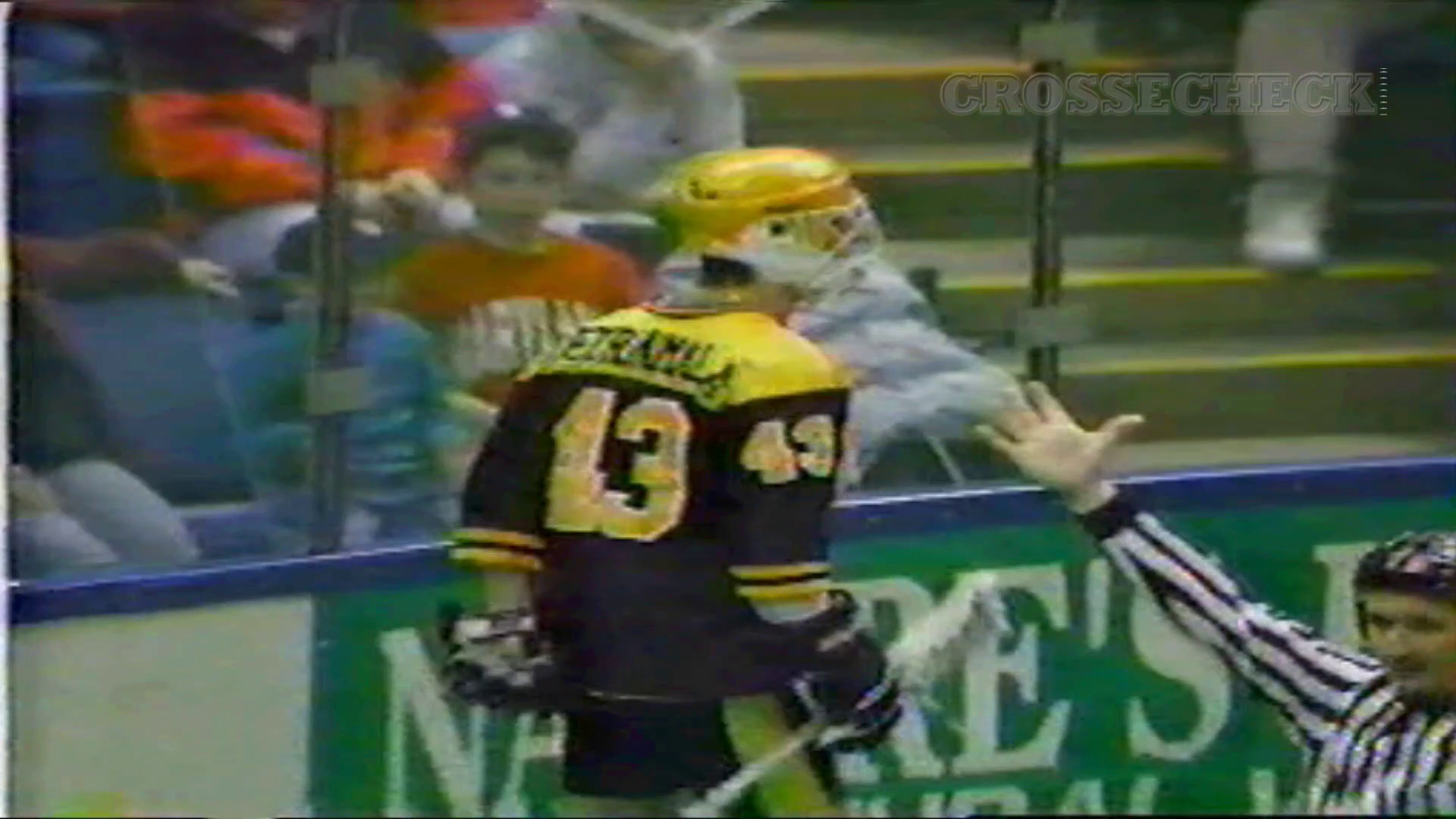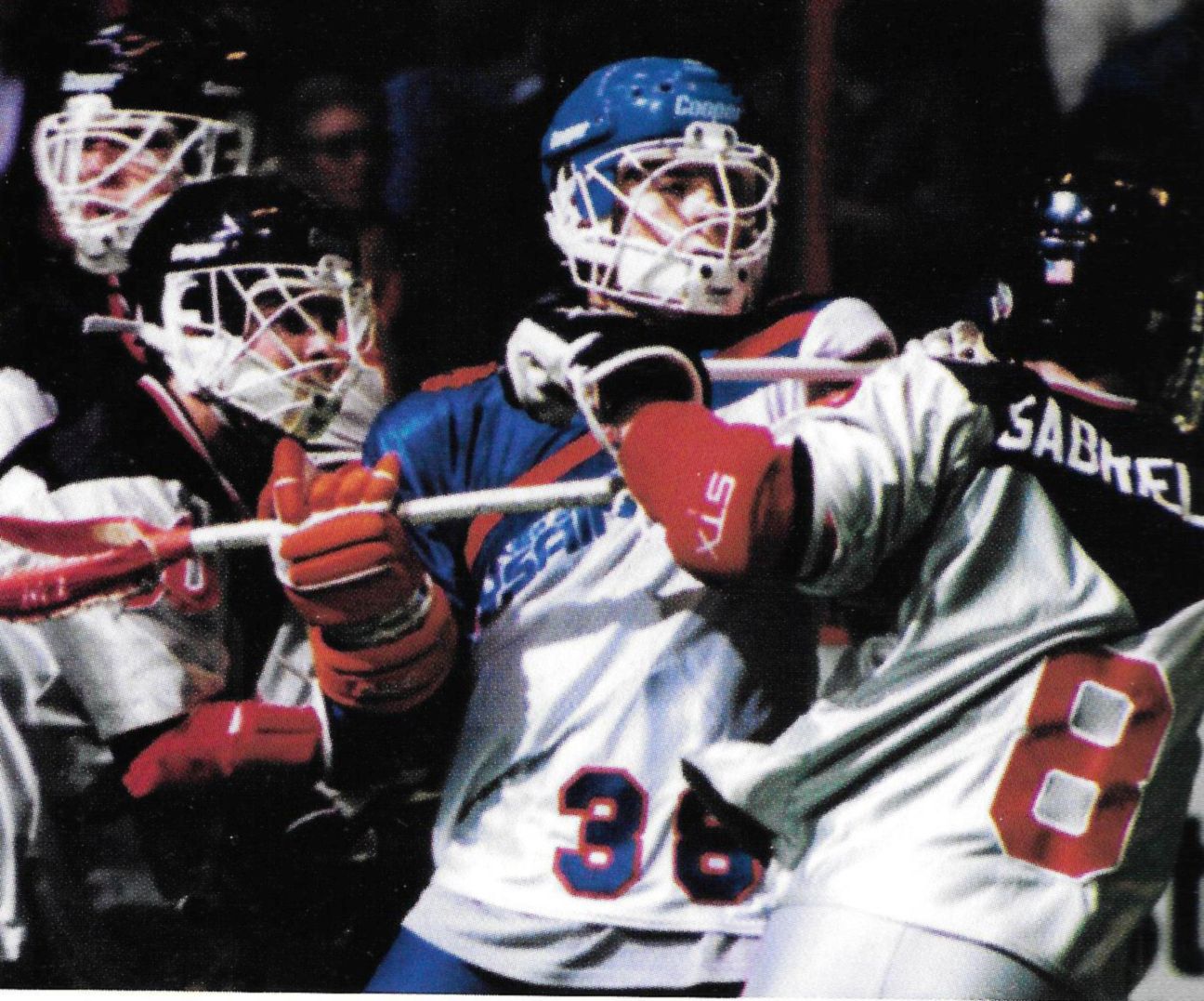

by Jack Gatecliff - Sports Editor - The Standard - 2/14/76
It was no surprise…
The voice at the other end of the telephone line said: “Well Jack, you were wrong in your column a couple of months ago.”
This wasn’t unusual.
We’ve been wrong before and we’ll be wrong again but the voice was easily recognizable.
“You predicted the National Lacrosse League would not last more than half the 1976 season,” said Bob McCready.
“Well it’s a little early to say I’m incorrect,” we answered, mentally checking our calendar and finding it was still February, more than two months away from the opening NLL game.
There was a chuckle from our caller.
“It was just your timing was off,” said the St. Catharines-born lacrosse goaltender. “I just got a telegram from the Maryland president saying the league was kaput as of now.”
The date was Friday, Feb. 13, certainly an unfortunate and unlucky day for all those who squandered money on the project and the players who gave up, in some cases, excellent jobs in Ontario on the chance the game they loved could indeed be developed into a successful professional league.
And, to wrap up this part of the column — why did we know it was Mr. McCready?
Well Bob was hit in the Adam’s Apple by a lacrosse ball a few years ago. He couldn’t speak at all for several weeks and when his voice did come back it was, and still is, just a little raspy.
Not unpleasant, mind you, but just slightly different.
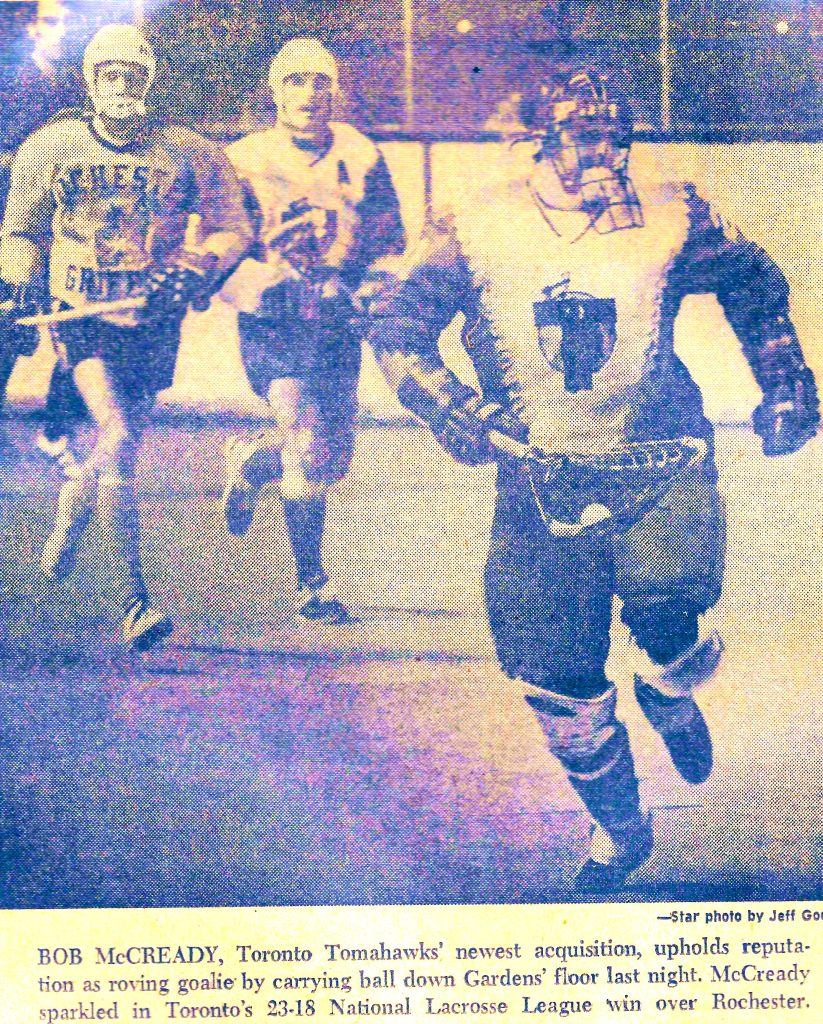
Played his cards right…
The likeable McCready is not only a fine goaltender but also a pretty smart cookie.
He’d been involved with two pro lacrosse league failures in the late 1960s — playing with Montreal one year until it closed up shop then St. Catharines the next when the new league (in name only) went belly-up.
This time around, as in the past, he played it cautiously and in 1974 when the NLL, with new money from National Hockey League team owners, was poured into the project he signed on but continued his job with General Motors while performing for Toronto Tomahawks.
And what a performer he is.
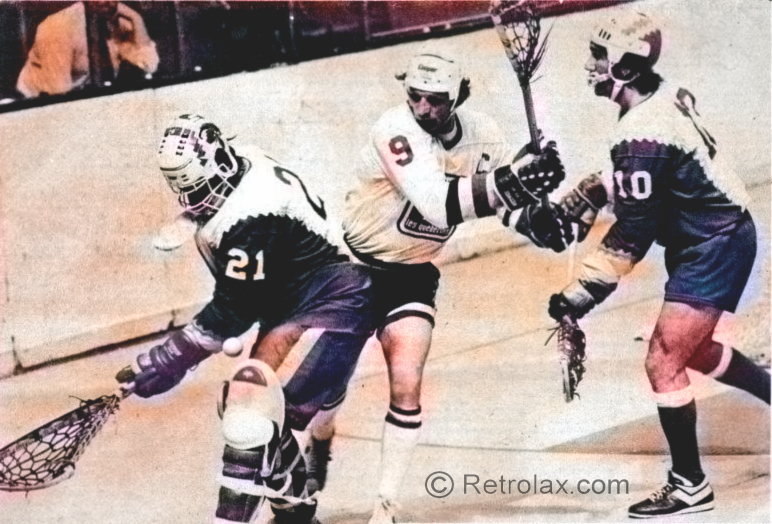
There has never, in the history of box lacrosse, been a goaltender as offensively-minded as Big Bob.
The year he played pro here in his own home town he led the Golden Hawks, as they were known, in total points for a large part of the season and finished with more than 100 including at least a dozen goals.
His dashes up the crease were worth the price of admission alone.
It was this color which made him invaluable to the promoters of professional lacrosse and he was one of the most popular players wherever he hung his pads — Montreal, Toronto, Boston, Maryland and before that as an “amateur” in St. Catharines, Whitby, Brantford and assorted other stopping-off spots.
In 1975 the governors ordered that all players must be fulltime — that is live in the place they were playing and hold down no other job.
Again Bob played it right, taking his holiday time at GM to explore the possibilities in Boston while playing there three or four weeks early in the schedule, then being flown to Maryland following a trade when the team owners relented a bit on the fulltime business.
That’s why Bob McCready, although sorry as is yours truly that the NLL failed, still has his 15-year seniority at General Motors and will probably play senior lacrosse this summer somewhere in the area.

No lack of effort…
Despite the demise of the NLL when it was decided there was no way to operate with only four teams (Philadelphia, Maryland, Quebec City and Long Island) were ready to go, Montreal and Boston just ran out of money) the chief proponents of the league, Morley Kells and Jim Bishop, can’t be faulted for lack of effort.
Both were involved in the first two attempts which resulted in failure and it was Bishop who is said to have talked Detroit Red Wing owner Bruce Norris into financing not only the Toronto Tomahawks in 1974 but a Detroit club in one of the earlier projects.
The Norris name and several other well-heeled NHL types gave the NLL a degree of credibility and two years ago it looked like it might just get off the ground.
Toronto, Rochester and Syracuse lost money but Philadelphia, Montreal and Maryland claimed to have at least broken even.
Last year it was a different story.
Although Quebec City had some large crowds the attendance was generally down, especially in Philadelphia where the average dropped from more than 10,000 to under 5,000.
They even tried playing fewer games, reducing the schedule from 56 to 48 games but nothing could save the rapidly-sinking ship.
In the end it was the same story so many teams and leagues are telling these days — too much money going out, not enough coming in.
Estimates have placed the two-year losses at about $10 million.
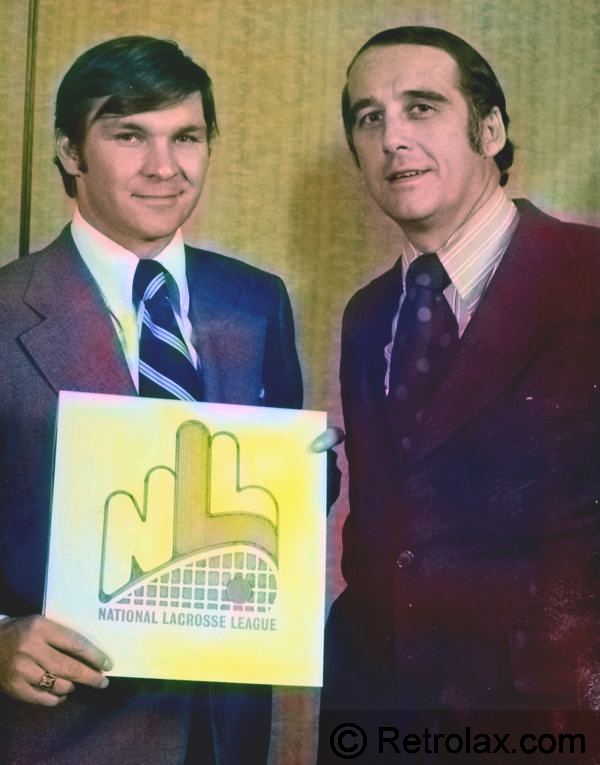
One last gasp…
We understand there was one last effort by Kells and Bishop to save the NLL by playing some games in the American cities where the game was supported reasonably well and others in Ontario communities such as Brantford, Peterborough and even St. Catharines was mentioned.
Instead of salaries the players would receive about $100 a game.
We know for a fact St. Catharines could never support any summer sport which required a sponsor to pay $100 a game to 20 athletes — even $50 might be difficult.
It was really just a pipe-dream.
The one bad move rather than starting in the first place made by the NLL was not sticking to the anti-inflation plan laid down in 1974 which placed a $15,000 limit on all salaries.
Some players got $30,000 or possibly even more in 1975 which was an absolutely ridiculous departure from what had been previously arranged.
The NLL might not have survived even with the salary limit. Without it there wasn’t a hope.