
By SANDY BURGIN - Worcester Telegram - 3/30/1975
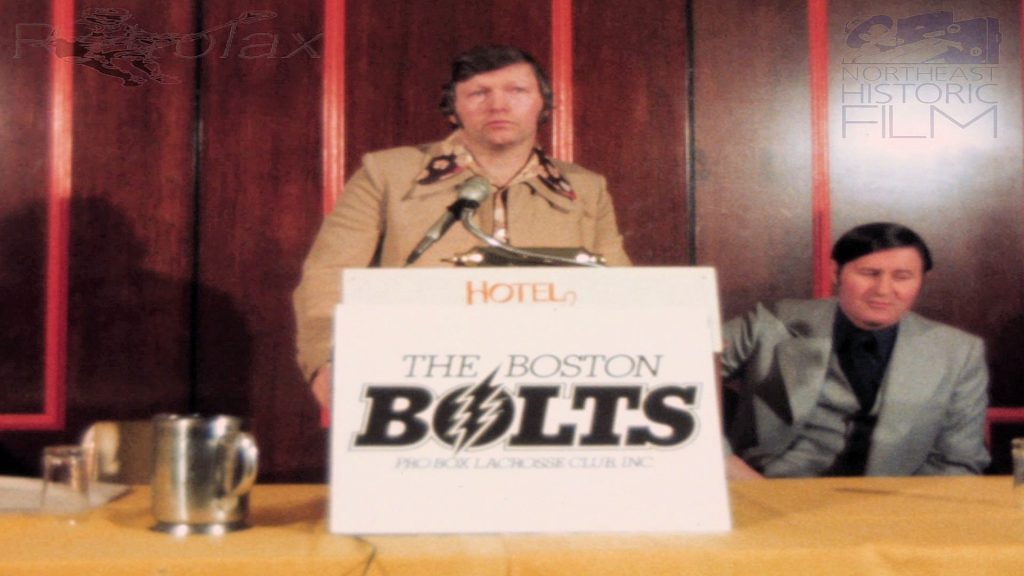
BOSTON — There will be something new, very new next month at the Boston Garden. While the Bruins, Celtics and Barnum & Bailey mark the annual rites of spring, the Boston Bolts (as in lightning) will burst forth on the sports scene. The Boston Bolts? They’re Boston’s entry in the six-team National Professional Box Lacrosse League.
The Bolts are or were actually the Toronto Tomahawks, who played in the league’s initial season last year and were purchased by 12 greater Boston businessmen, including Jon Morris of Holy Cross and New England Patriot football fame.
Educate the Public
“I really think the sport has a chance to make it here in Boston if the fans give it just one look,” said Morris at a press luncheon last week. “The big thing is trying to sell the sport to the people and to educate them in the game. We’ve been running movies and clinics at various shopping malls in the area and hope to continue with this. With a sellout almost assured for our first home game (April 28 vs. New York Tomahawks,) things look bright.” For the uninitiated, box lacrosse is a version of the old Indian game of field lacrosse — a fast skillful, rough indoor sport played in a hockey rink on wood rather than ice.
There are six men per side (instead of 10) using web-ended sticks to get a hard rubber ball into a goal that is 4 feet high and 4½ feet wide. “Box lacrosse is a hybrid,” said Bolts President Jim Herscot. “It combines the best parts of hockey, basketball, soccer and football. “There is more scoring than in hockey without the adding machine needed for pro basketball, from which it has borrowed the 30-second clock.” “There are many basketball and soccer moves,” Herscot said. “Goalies initiate fast breaks with outlet passes while other players set picks, pass behind their backs and jostle for position like some of the NBA centers.”
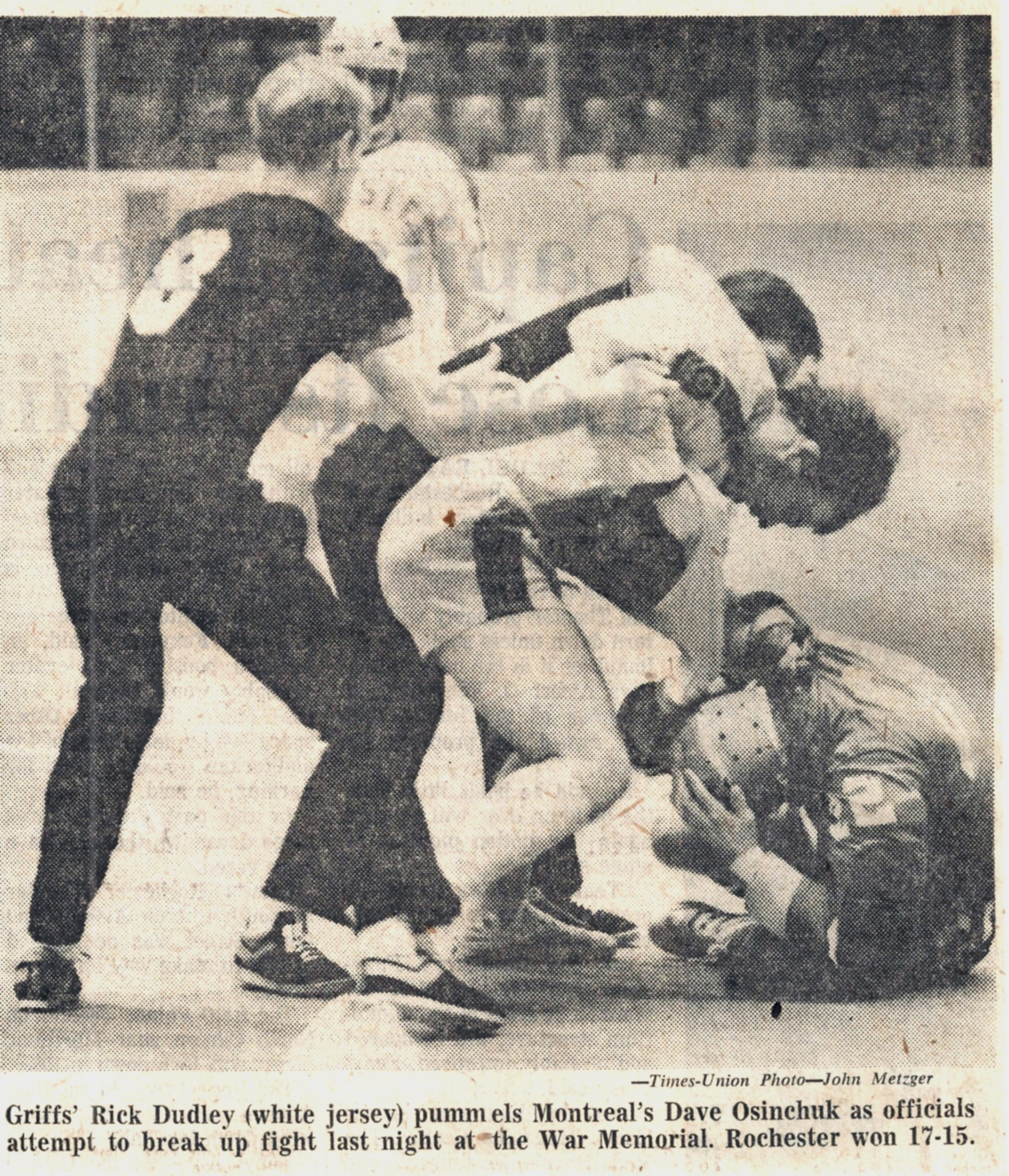
From hockey comes the six-man sides, the penalty box (for tripping, elbowing, slashing, etc.), the system of substituting during the course of play with no time-outs and some of hockey’s real rough stuff — cross-checking and slashing, which are legal in box lacrosse. Selling a SportLast year some of the league’s teams tried to sell the sport on it’s fighting and violence.
The Maryland Arrows, who play at Capital Center outside Washington, distributed bumper stickers featuring a cartoon brute named Cruch Crosscheck and the slogan “Ya gotta Be mean to play box lacrosse.” There were radio commercials having Attila the Hun praising the sport as “the meanest game in the World.”
Philadelphia used its Stanley Cup hockey champions as a ploy, asking fans to think of box lacrosse as “hockey where every team is the Philadelphia Flyers.”
The Philadelphia Wings were one of the three teams which made money last year. The Wings averaged nearly 10,000 fans while the Maryland Arrows and Montreal Quebecois were over the 7,000 mark.
The other three teams, the Syracuse Stingers, Toronto Tomahawks and Rochester Griffins, who won the Nation’s Cup (league playoff title) lost money and have been shifted to major cities. The Stingers have become the Quebec Caribou while the Griffins are now the New York Tomahawks.
Stable Ownership
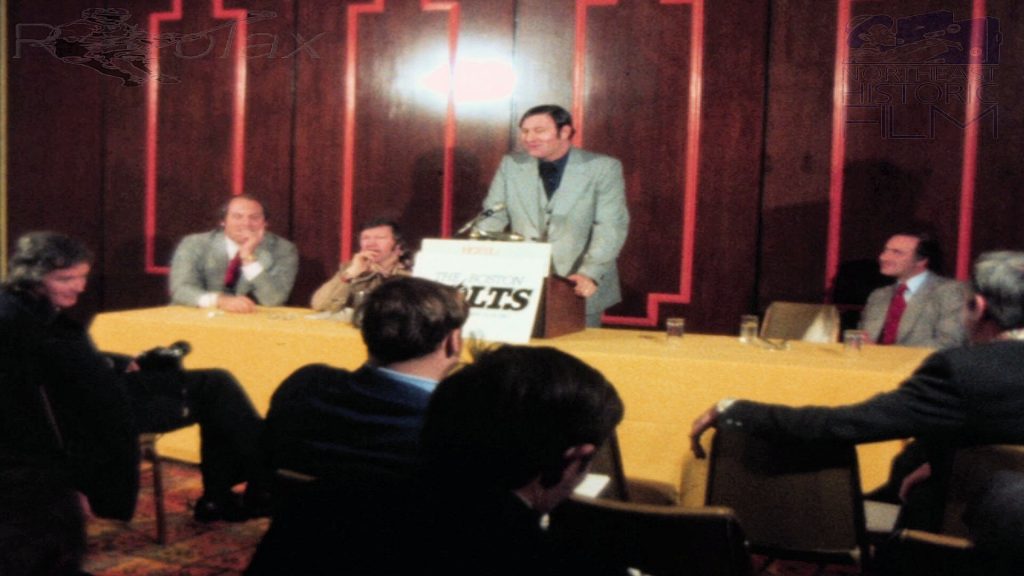
“The ownership in the six teams is now very solid and stable,” said Herscot. “We’re not going to rush into expansion, we’re going to build our league on a solid base like the old six-team NHL.” Seven years ago, Morley Kells and Jim Bishop, two lacrosse coaches in Canada, formed the National Lacrosse Association with eight teams. It failed because the owners were unable to rent the necessary rinks.
This time, the present league seems to be well financed by several owners of the National Hockey League, including Bruce Norris of the Detroit Red Wings and Ed Snider of the Philadelphia Flyers. John Ferguson, the former Montreal Canadiens strongboy, is part owner and general manager of the Montreal lacrosse team while Marius Fortier, Guy Lafleur’s father-in-law, has a piece of the Quebec franchise. The Bolts hope to attract fans with reasonable prices and good seats.
“We hope to average about 8,000 per game,” said Herscot, “and we’d need to average between 6,000 and 7,000 just to break even.” They will play a 56-game schedule with 28 games at home. “We think realistically we can reach our goal since we are scaling the tickets from $3.50 to $6.50,” Herscot said. “We will have special season ticket plans with a 10-game pick-a-plan.
We will discount heavily on group rates. “We are planning to have a seating capacity of 12,001 and we plan to close off the second balcony,” said Herscot. “This will allow us to use the Garden air cooling system.
All games will be played at night. We don’t believe that for six games in July and four in August, it will be uncomfortable in there.” There won’t be any television lights either, although the Bolts certainly would hope to get some TV exposure in the future.
Box lacrosse has its roots in two Canadian hotbeds, Ontario and British Columbia, where boys grow up playing hockey in the winter and box lacrosse in the spring and summer. There are more than 200,000 registered lacrosse players in Canada.
There are 25 box lacrosse players on each of the six teams. The teams conduct a universal player draft just like the NHL. The only difference — a player must sign a “contract” with the league before signing a player contract. Salaries range from $6,500 to $15,000.
The super stars, such as Maryland’s Paul Suggate, get from $20,000 to $25,000. The Bolts, according to Herscot, will have two of the better players in the league in Ivan “The Terrible” Thompson and his brother, Brian Thompson.
Both played on Toronto’s team whose 25 players and contracts were bought up by the Bolts. There were three Americans on the Toronto team last year. They will be in training camp in Peterborough, Ontario next week when training begins.

Ferguson Coach
Larry Ferguson, who played with the Philadelphia Wings last year, has retired as a player and is the new coach of the Bolts.
As a Canadian senior player, he captured three scoring championships, was named to three Mann Cup (amateur) champion teams.
He was also a member of the Peterborough club that won the Canadian Junior Lacrosse crown in the late 1950s. The managing director of the team is Robert Hanna who according to Herscot, is “in charge of the entire team operations.”