
By CURT SMITH - D&C Sportswriter - 1/2/1975
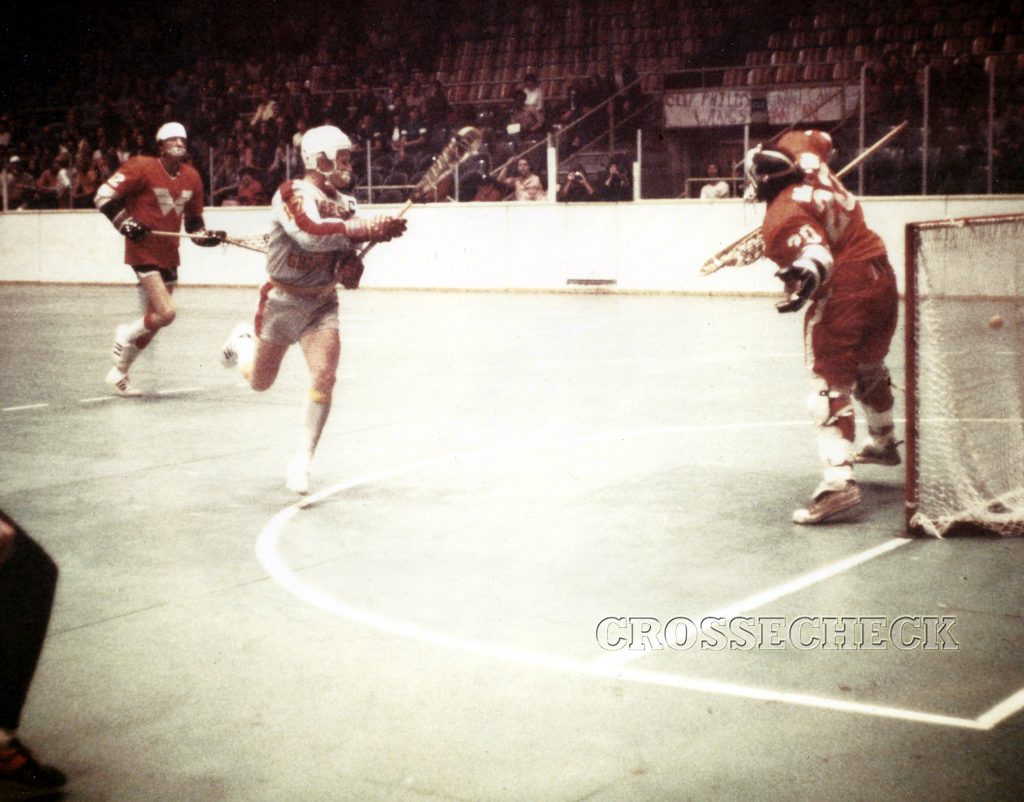
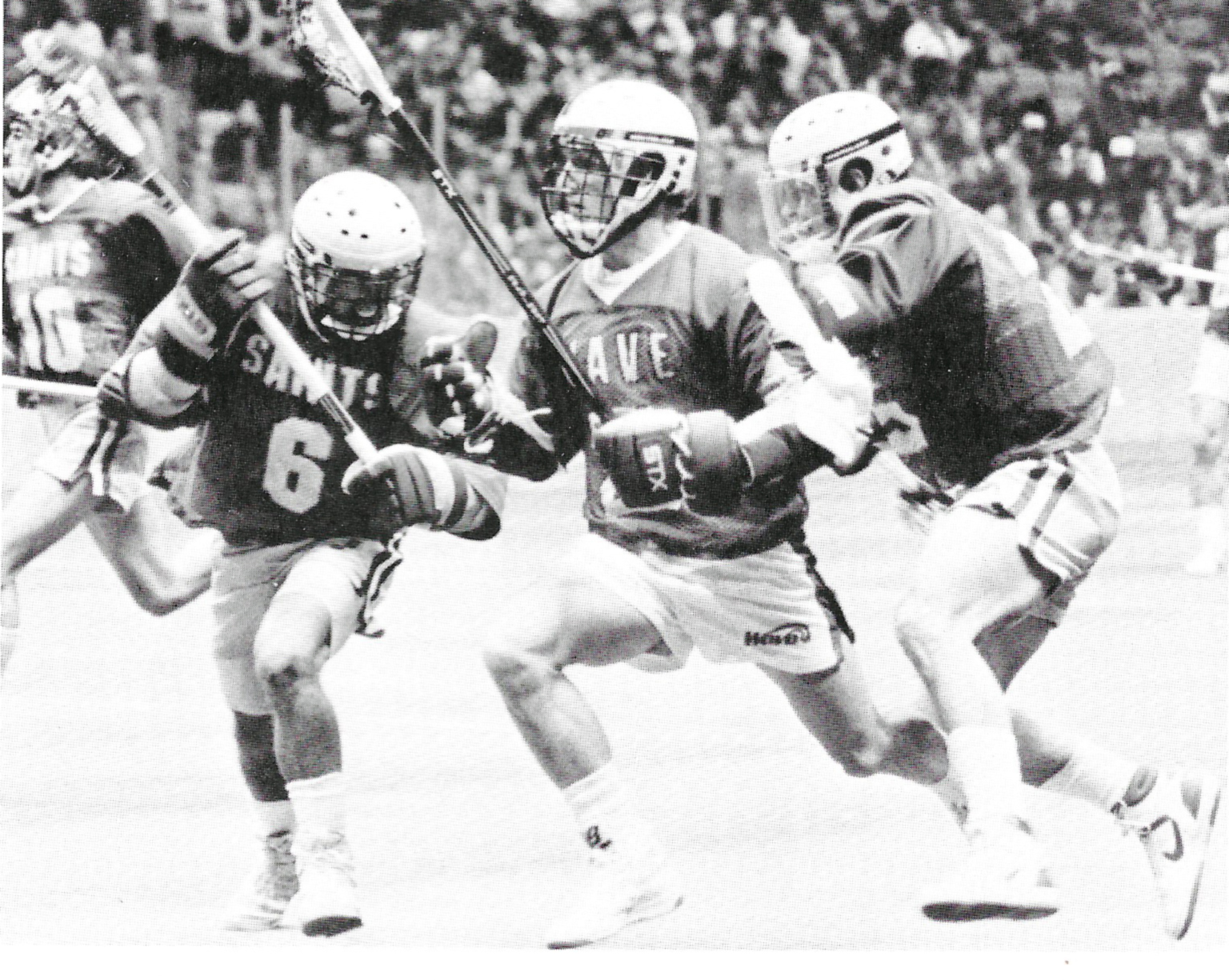
Their scenario reads like fiction bordering on outright fantasy. What once was known as the Rochester Griffins are still in limbo, unable to find a home.
One month ago the National Lacrosse League announced that the Griffins would be in Indianapolis next year. The details had been finalized. The sale of the club from owner Tad Potter to Indianapolis interests was underway.
But now the deal has collapsed completely. The Indianapolis group, in debt with its ownership of the ailing pro hockey Racers, has been unable to meet its financial obligations. Potter is left holding the Griffins, unable to sell them, unable to find a city which will take them.
“The Indianapolis thing was all set,” said Potter by telephone from Pittsburgh. “Then the Racers went down and our deal went down with it. I never thought it would happen. The deal was all finalized, then it was blown out of the water. I couldn’t believe it.”

The Indianapolis fiasco is the latest and most serious in a long line of misfortunes which have affected Potter. He wants to unload the Griffins. He can’t afford to run them again next year. He needs a buyer, but Potter says the NLL has given him less than a week to sell before it takes the club or forces him to operate it himself.
Two months ago Cleveland and Cincinnati were the leading contenders to get the club from Rochester, but both of them backed out. Then Pittsburgh was supposed to house the Griffins, but arena construction problems cancelled that deal. Now Indianapolis has backed out.
Potter envisions a bizarre solution which involves the Toronto Tomahawks’ franchise, now headed for Long Island.
Potter wants to trade his Griffins for the Tomahawks. He would then sell his Toronto club to a group which would move the team to Boston. And the Grif- fins would end up in Long Island.
“Our league wants the best team in the best possible location,” Potter said. “The Griffins are the NLL’s best team. New York is the nation’s best market.
“The Griffins are the NLL’s best team. This would be the best arrangement for the future of lacrosse in this country.”

Potter admits there is more to his plan than unselfish motives. His present financial situation is precarious. He has been beset by losses to the hockey team he owns, the Pittsburgh Penguins. In fact, the National Hockey League has had to lend Potter $250,000.
“I have a mandate from all clubs to do what’s best for the league,” says NLL president Gerry Patterson. “Don’t you think it would make more sense to have our league champions (the Griffins) in Long Island with its large market than in Boston?”
Potter said he won’t sell the Griffins outright to Boston, thereby avoiding the trade with Toronto. His asking price would be too high (near $500,000). Boston interests have shied away from that price, but Toronto’s Tomahawks are less valuable. Potter would have a much easier time selling them to Boston.
In addition, Norris would have to give Potter a sum approaching $100,000 in the exchange of clubs. So the Tomahawks- Griffins trade would benefit Potter in two ways. He receives money from Norris, and he’ll be able to sell the Tomahawks to Boston where he wouldn’t be able to unload the Griffins.
This deal is crucial to Potter and the entire NLL. Both are quickly running out of options. If the trade with Norris falls through, Potter will be stuck with the club. And he’s fast running out of cities to turn to.
There is almost no chance Potter will operate the Griffins next year. If he can’t trade them, the NLL will either operate the club or let its championship club fold.