
From the Associated Press - 3/28/1992
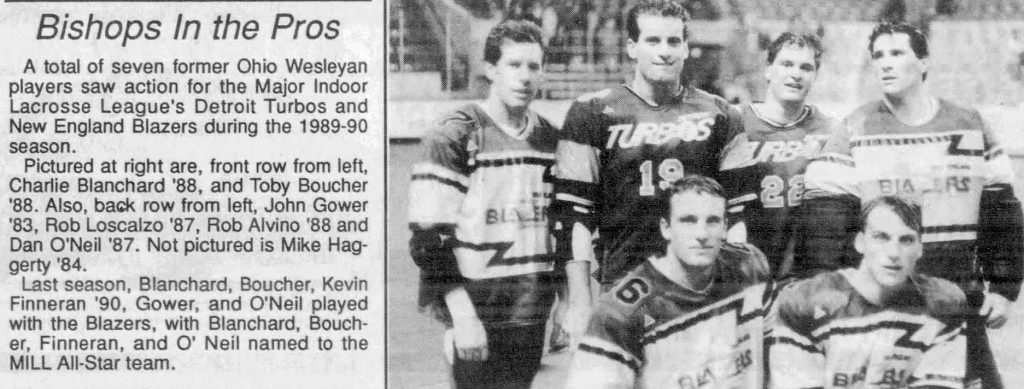
BUFFALO, N.Y. — Describe indoor lacrosse in five words, Buffalo Bandits general manager John Mouradian was asked.
“Bang! Bang! Bang! Bang! Bang!,” he replied without hesitation.
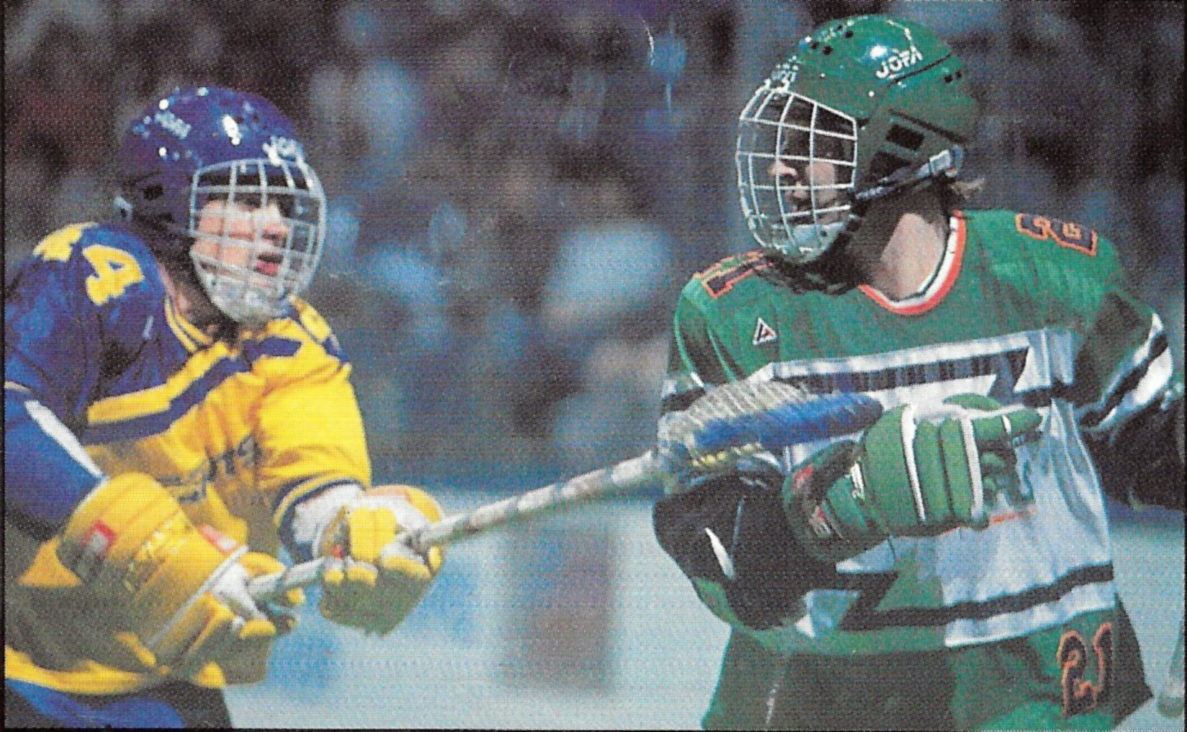
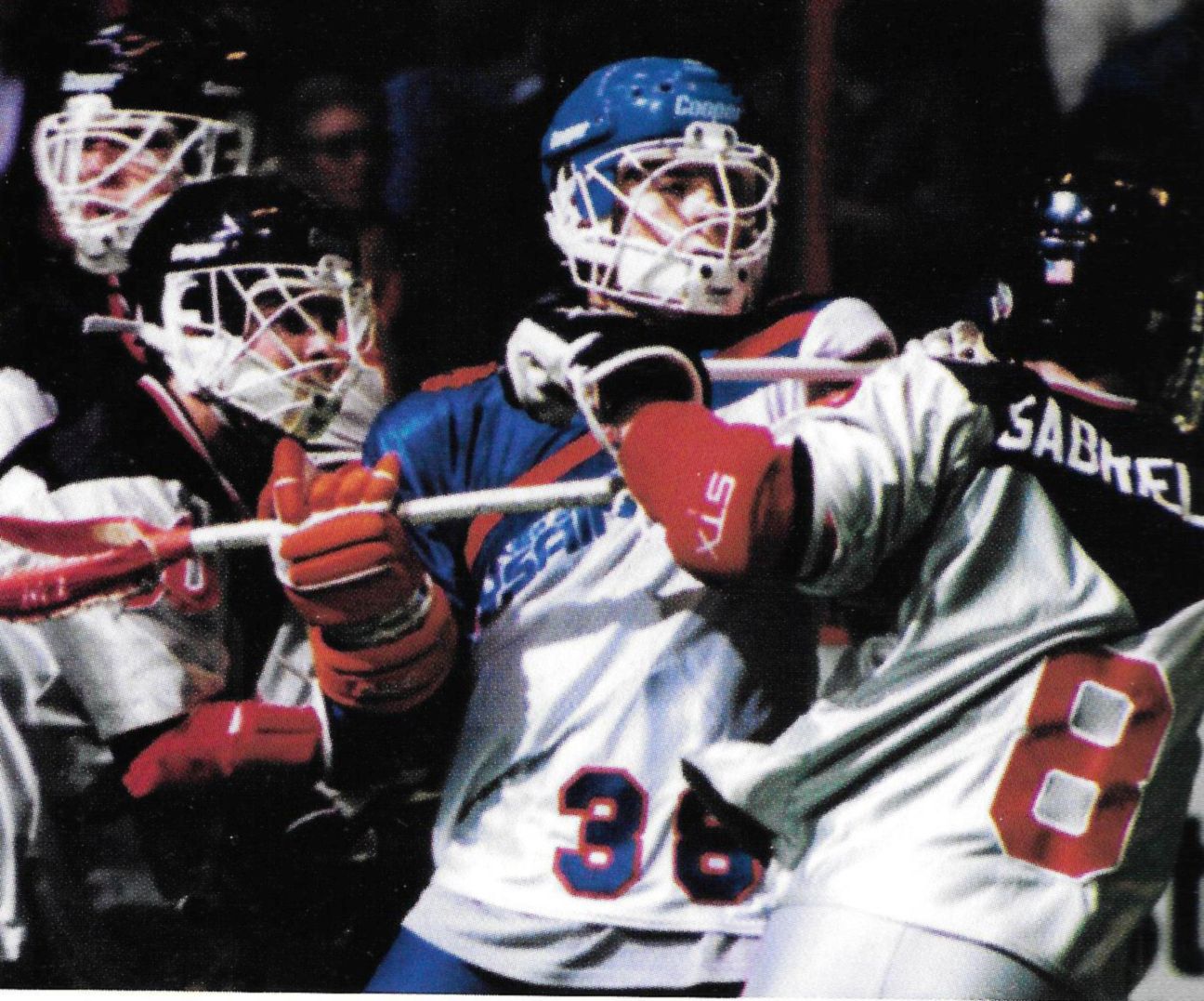
Bang — as in crunching body checks.
Bang — as in free-wheeling stick swinging.
Bang — as in legal cross-checking.
Bang — as in fast-paced scoring.
Bang — as in boffo box office.
Called box lacrosse on the Indian reservations in Canada where it originated, indoor lacrosse is booming in the United States’ traditional lacrosse hotbeds along the Eastern seaboard.
Attendance in the seven-team Major Indoor Lacrosse League has averaged about 12,000 a game, according to league president Christopher C. Fritz, who said between 350,000 and 400,000 fans will have attended a MILL game this season.
“By no means have we fulfilled any of our dreams, but the good news is we’re still able to keep them alive,” said Fritz, who founded the league in 1987 with partner Russ Cline.
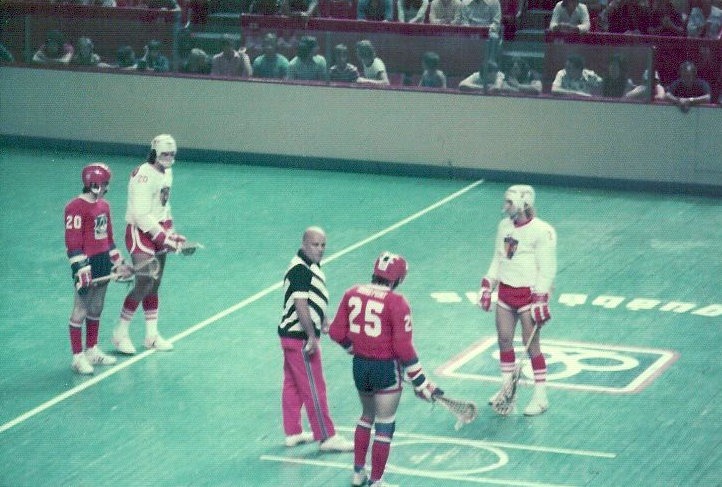
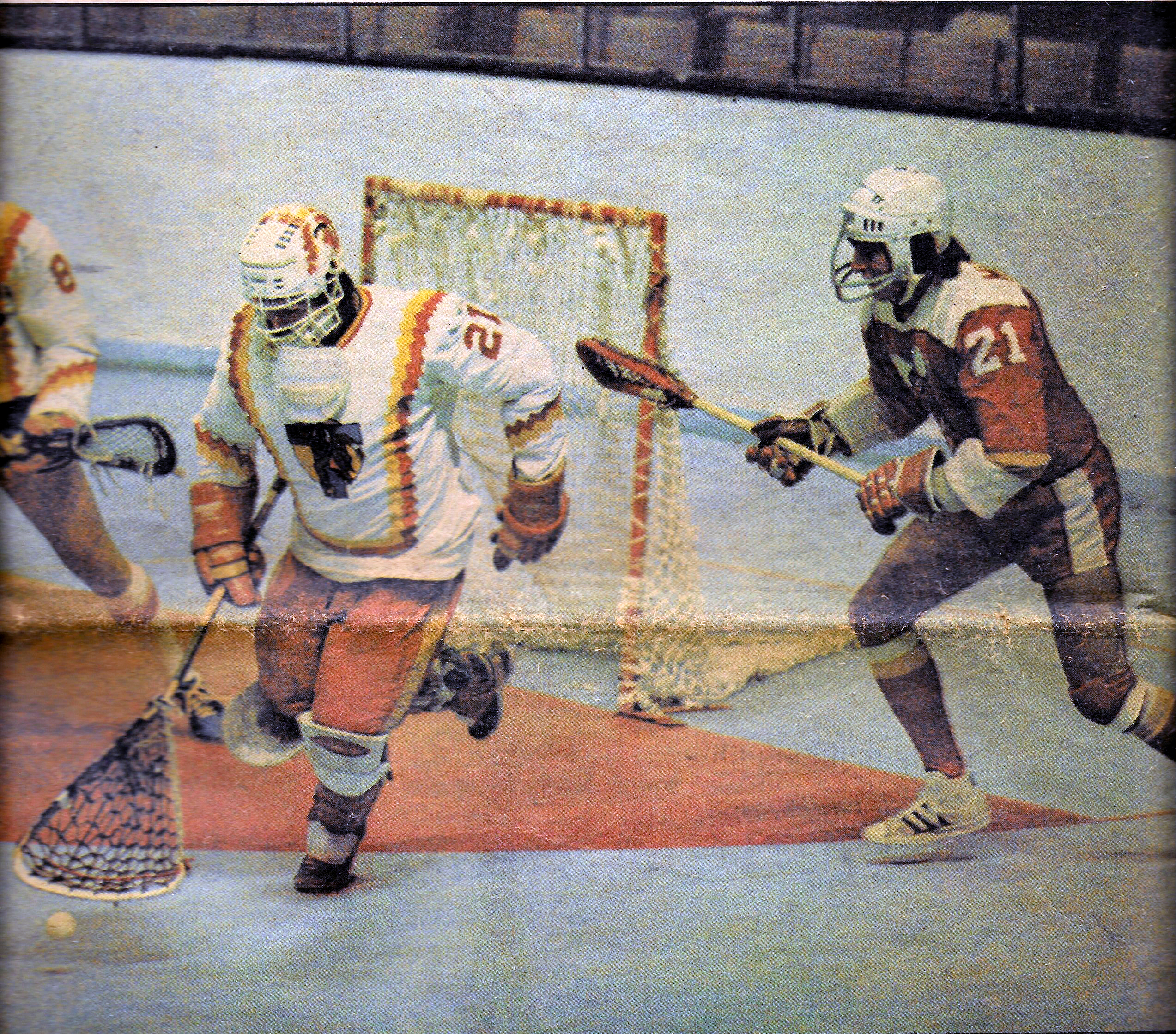
It isn’t the first attempt at a box lacrosse league. The National Lacrosse League operated in a number of cities in the northeastern U.S. and Canada in 1974-75. It’s undoing, Fritz said, was the high salaries it was paying.
“They were full-time players and they were paying them big salaries then. I heard some of the salaries were getting $30,000 to $50,000,” he said. “For a league like that, in the ’70s, that was big money.”
When a players’ association began demanding more money, “the owners just took a walk. And there were a couple of owners who didn’t have big pockets in the first place,” Fritz said.

The league left behind a video, which is how Fritz got interested in lacrosse. A former record store owner and truck-show promoter, Fritz saw the video and “was overwhelmed with the product. It’s a real promotable product.”
Box lacrosse is a high-scoring, hard-hitting hybrid that combines the passing and shooting skills of hockey and basketball with the contact of football.
“It’s got everything basketball has and everything hockey has,” Fritz said. “It’s a higher-scoring game than soccer. It’s got the punch of football and it’s fast — a game is approximately two hours and it’s non-stop.”
There are differences from field lacrosse.
A 30-second shot clock eliminates stalling. Cross-checking and slashing are permitted, provided it’s done below the neck and above the knees. And the boards generate quirky bounces and rebounds — as well as fear among some field players.
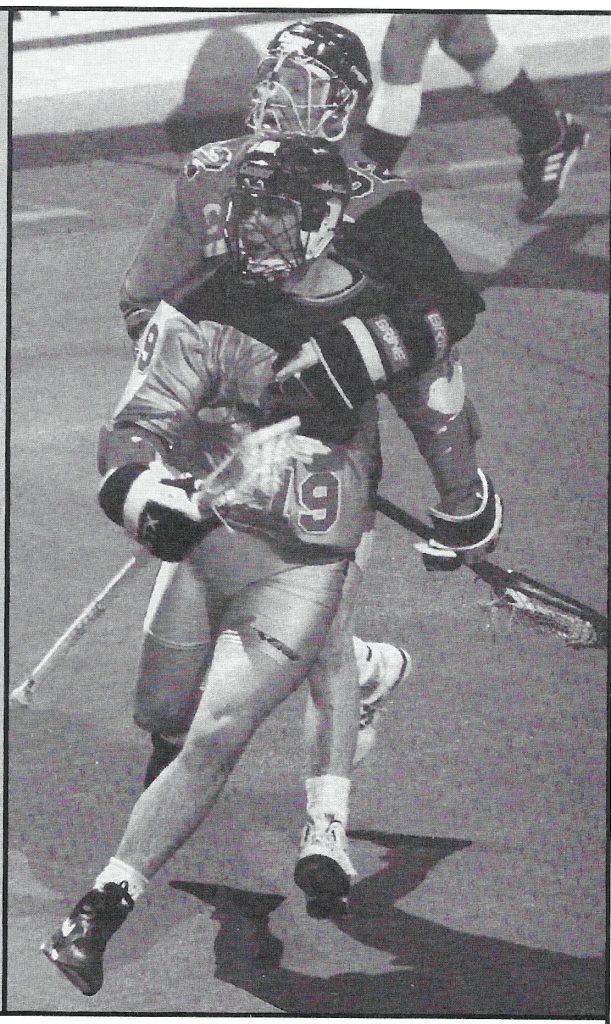
“Some guys are great field players, but they get inside in close quarters and they see the boards,” Mouradian said. “These guys, the first couple of practices, they go into the boards, stop and pick up the ball. Well, obviously, you’re going to get your butt smoked.”
“If it’s not the boards, it’s a player coming at you or the goaltender,” Bandits captain Jim Veltman said. “You’ve got these things coming at you from every angle and split seconds to make these decisions. I think the fans appreciate that.”
There is finesse, but a significant part of the appeal of indoor lacrosse is the hitting. “Somebody who wants to watch curling … they’re not going to like it,” Fritz said. “Somebody who likes football or boxing … this is perfect for them.”
“It’s just like watching a car race,” Veltman said. “You don’t watch cars going round and round in an oval. Even though you don’t want it, you’re kind of hoping for that accident.”
That emphasis on hitting is the only quarrel lacrosse purists have with the indoor game.
“There is concern that the first taste of lacrosse for many people throughout the country is by watching the indoor game, which is fairly violent,” said Steve Stenersen, director of the Lacrosse Foundation, the sport’s national development agency.
Still, Stenersen, who played in the MILL during its first two seasons, is happy for the exposure. “Anything that gets the stick and ball game in people’s eyes is positive,” he said.
Players have full-time jobs away from lacrosse, are allowed to practice only once a week and are paid on a sliding scale depending on their years in the league. Rookies get $125 a week; six-year veterans $325.

But Veltman, a substitute teacher outside of Toronto who travels 1 1/2 hours each way to attend practice, said most players are just happy to be playing a sport they didn’t expect to play once they left college.
“To play in front of 16,000 fans is just unbelievable,” he said. “I’d pay to play, but don’t tell the coaches that.”
The Bandits sold out 16,000-seat Memorial Auditorium for two of their four home games this season. The success of a team in Buffalo, where lacrosse is not widely played, leaves Fritz optimistic about the chances for success elsewhere.
“I’d like to see a division on the west coast within the next three years, encompassing Seattle/Tacoma, Vancouver, Portland, Sacramento and maybe Los Angeles,” he said. “For the immediate future, I’d like to see something in either Toronto or Montreal.”
He’d also like to increase the league’s television exposure. The Prime cable network, in an estimated 25 million households, broadcasts a game each week.
Also down the road, Fritz and Cline envision selling the league’s seven teams to local owners. Fritz and Cline own all the teams now, with local partners getting 40 per cent of the gate revenues.
Lacrosse, considered North America’s oldest ball game, has been around since before Europeans settled the continent.
Fritz’ sped-up, boxed-in, bang-bang adaptation may well be its future.