
By JIM WAGONNER - STATEN ISLAND ADVANCE STAFF WRITER - FEBRUARY 28, 1988
It wasn’t the type of statement you might expect from Darrell Russell, a graduate of the University of Baltimore Law School and former Assistant Attorney General of the State of Maryland.
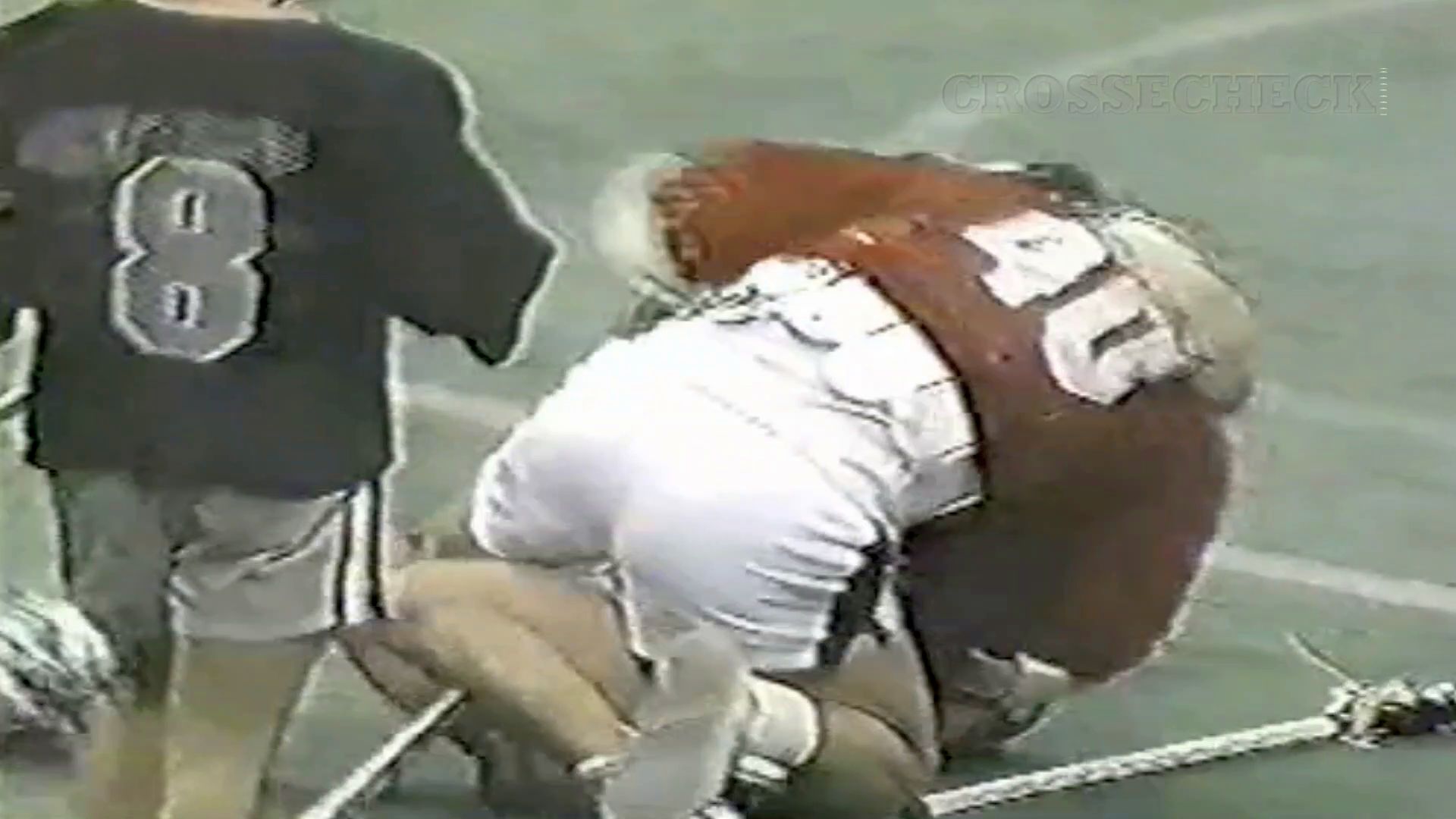
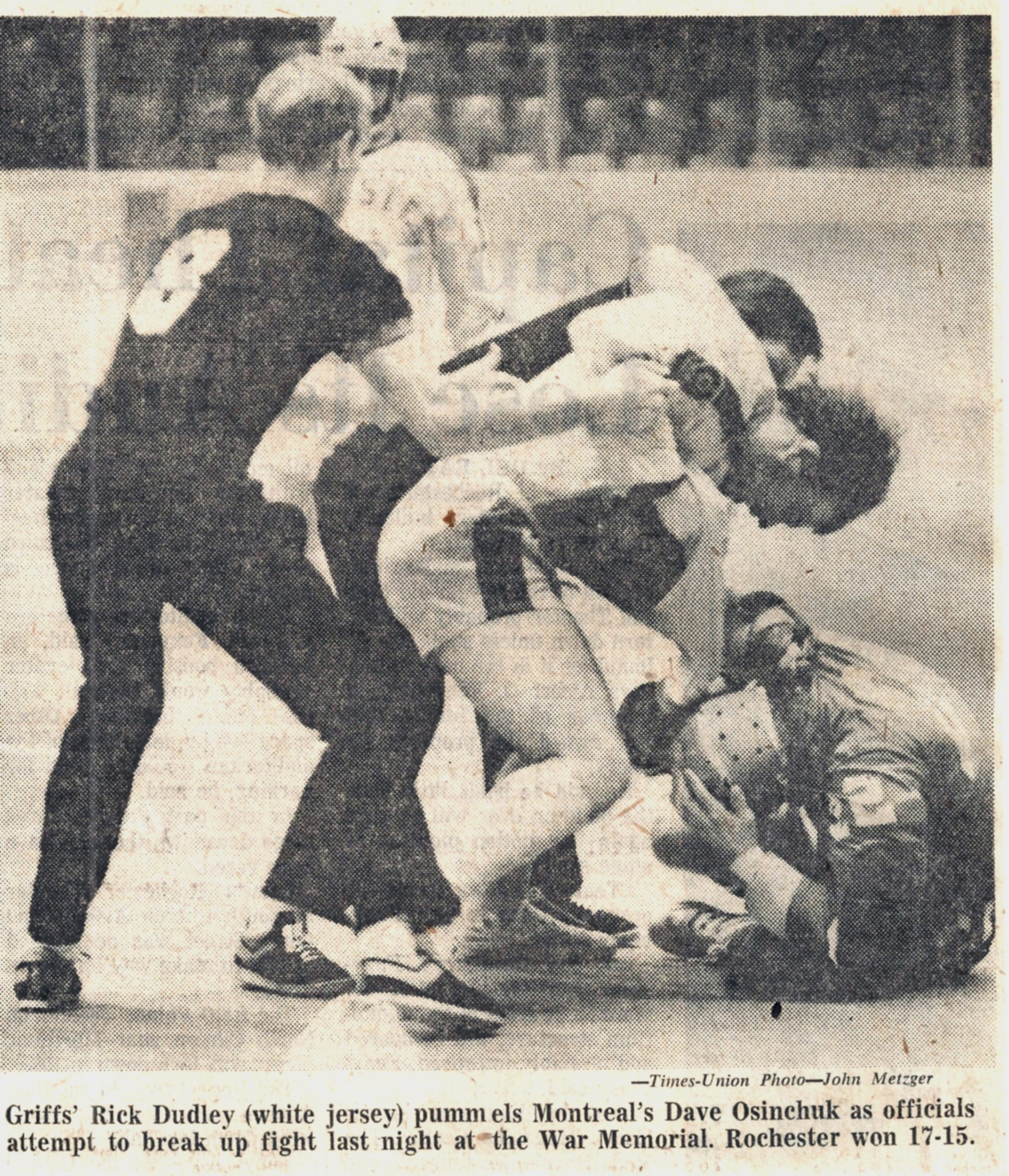
Russell, now a Towson, Md., attorney who doubles as commissioner of the Major Indoor Lacrosse League (MILL), stopped at the press table during a recent game between the New Jersey Saints and Washington Wave at the Meadowlands Arena. “All of our games have been close,” said Russell, his eyes excitedly scanning the announced crowd of 5,861, “and with a lot of fighting.”
The fledgling four-team MILL, fighting for recognition during its second season, hopes to withstand the punches any new professional league can anticipate. That battle for credibility probably will rage for quite some time.
But with current franchises in New Jersey (Saints), Philadelphia (Wings), Washington, D.C. (Wave) and Baltimore (Thunder), the MILL has already seen enough encouraging signs to consider expansion next season.
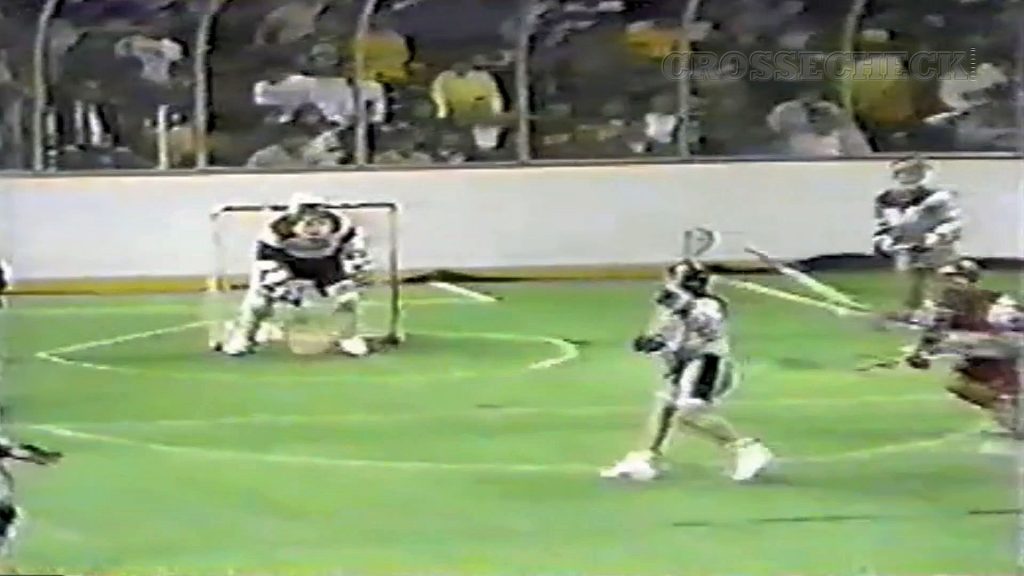
“I think it’s here to stay,” said Washington coach Glenn Little, who played goalie for the Wave during last year’s introductory season of what was called the Eagle Pro-Box Lacrosse League. “It’s the hook … we have to get them out there for the first time.”
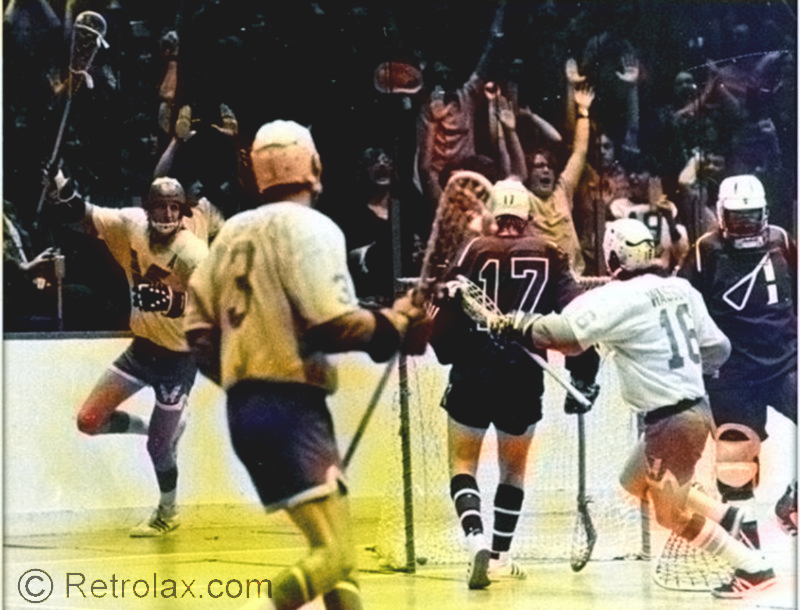
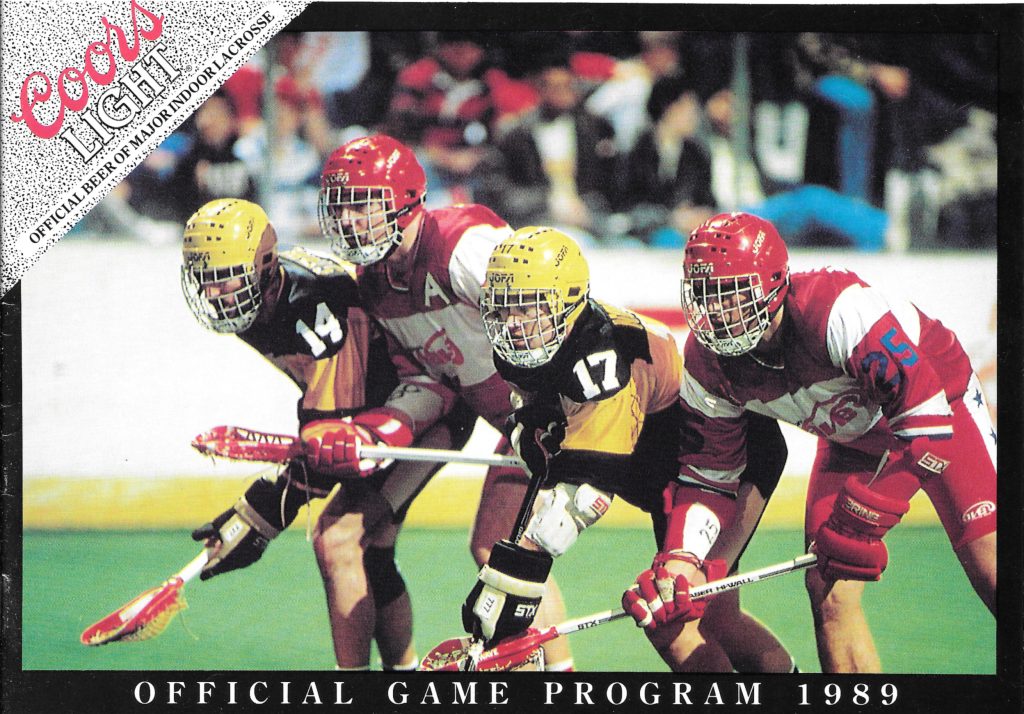
Those who have attended a game – and a league-record 16,700 fans were at the Spectrum last month for a game between Philadelphia and Baltimore – were greeted with a fast-paced, physical brand of lacrosse played on field measuring 200 feet by 85 feet.
Sounds of rock music from the public-address system help create a frenzied mood when the home team starts an attack, and players, who earn $150 a game, are constantly challenging each other because of the physical nature of the sports.
“Sometimes it looks like mass pandemonium,” admitted Little, who said MILL players combine skills of football, soccer, ice hockey and basketball athletes. “Really it’s just run and gun.”
While purists might cringe at what the MILL has done with the first sport played on the American continent – native Indians used lacrosse for both recreational purposes and as training for combat – spectators seem to enjoy normally high-scoring contests.
In a recent game at the Meadowlands, New Jersey scored 11 straight second-half goals during a 25-15 win over Washington.
The Saints set a single-game scoring record and the 40-goal total was also a MILL record. But it still hasn’t exactly set the Meadowlands on fire with interest. The biggest crowd of the season was 7,130 for the Saints’ season opener.
Tonight, at 7:30 at the Meadowlands, the Saints meet Washington for the regular season championship. Both teams are 5-2. “I think we’re fighting what lacrosse has been in the past,” Little said. “It has always been a culture sport where you have the preppies playing it. That will go away as the league stays around longer.”

Most of New Jersey’s players have college experience, including careers at Cornell, Rutgers, C.W. Post, Virginia and Adelphi. And most, obviously, have full-time jobs. “I think it’s pure sport,” Little said. “We don’t have spoiled, overpriced crybabies. We’re definitely not in it for the money. We’re in it for the love of sport.” League officials believe minimal media coverage will eventually improve. SportsChannel broadcast two recent games and a Washington radio station provides live coverage of road games. The MILL also has decided to test the waters slowly – the entire season consists of 18 games. Saints tickets cost $15 and $13.
Post-season playoffs begin next weekend. “Our pitch all along has been ‘Please come to one game,'” said Bob Engleke, coach of the New Jersey Saints. “Of course, we have to sell you on that game and hope you come back for more.”
Here are some MILL rules:
Six players per side, including the goalie, and each team dresses 18 players.
Four 15-minute periods.
A 45-second shot clock.
Positions are defined as power attackmen (2), wings (2) and point (1).
Substitutions are made freely, but a sub can’t enter the field until the player he is replacing has crossed the white substitution line drawn outside the player-bench area.
Personal fouls result in two- and three-minute penalties and the penalized player is released from the box if one or two goals are scored, respectively. A team can never have more than two players in the penalty box.
If a third infraction occurs, the offending player goes to the box but a substitute is allowed to play. Defensemen “may generally” use their sticks against the offensive player carrying the ball in any fashion provided he does not slash in the head or below the knees, and as long as the strike is an attempt to dislodge the ball from the attacking player’s stick.
Goals are four feet by four feet.