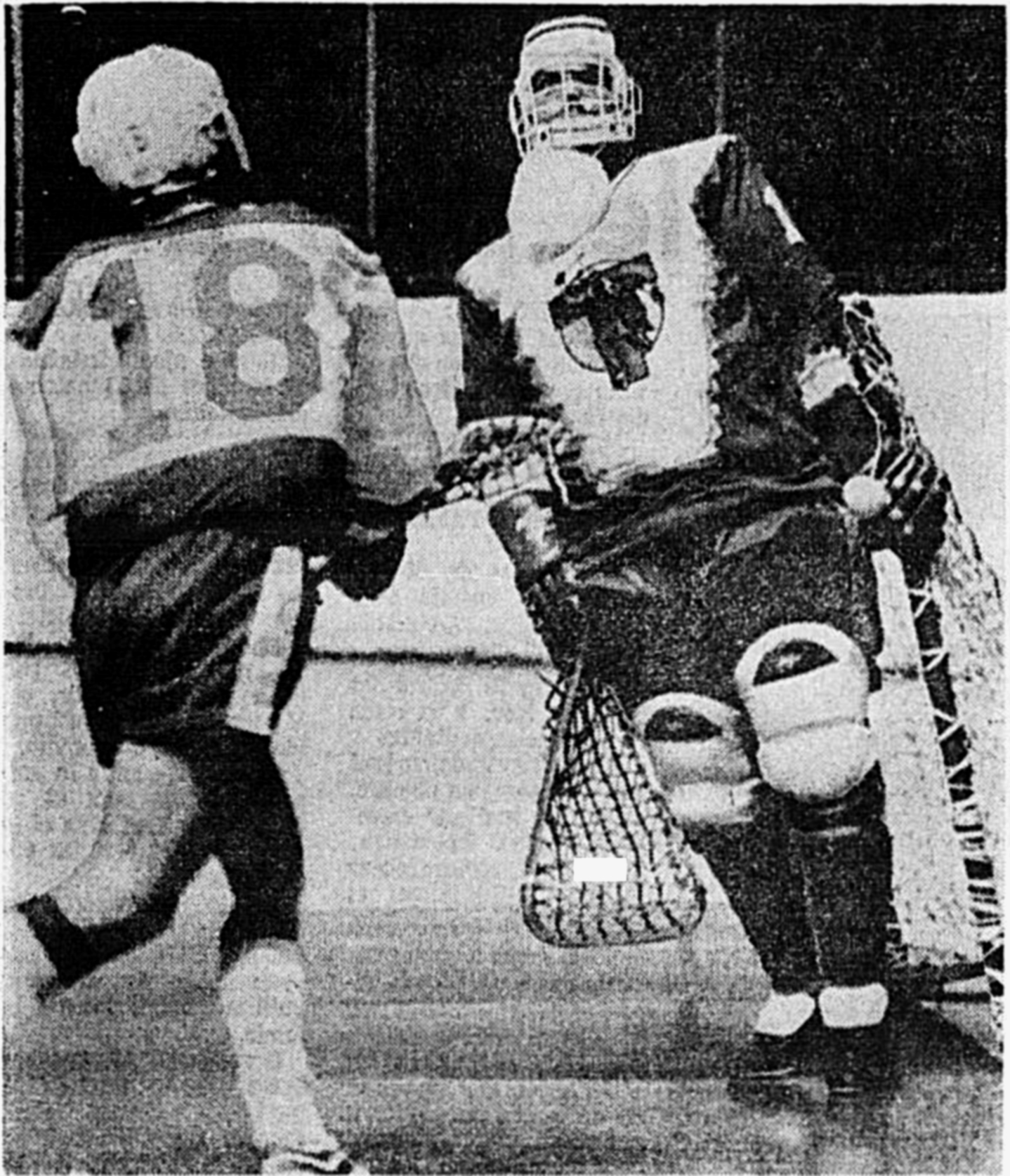

By Alan Richman; February 16, 1976
ANYBODY can start a league. Get a few guys with credit cards, paint your ball a funny color, sign some players for $9.5 million and announce that dribbling is on the house.
Fans may not beat you up on your arena, but a lot of reporters will show up for lunch.
Football is a game entirely different, the new frontier of sports. During his 16-year reign as commissioner of the National Lacrosse League, Gerry Patterson would occasionally be found sitting in a booth on the eighth floor of the Sun Life Building to the offices of the National Hockey League on the ninth floor of the Sun Life Building. “Clarence Campbell is always first to talk,” Patterson said. He has been commissioner of the NHL for 16 years as commissioner of the NHL and faced every conceivable problem but one. He has never lost.

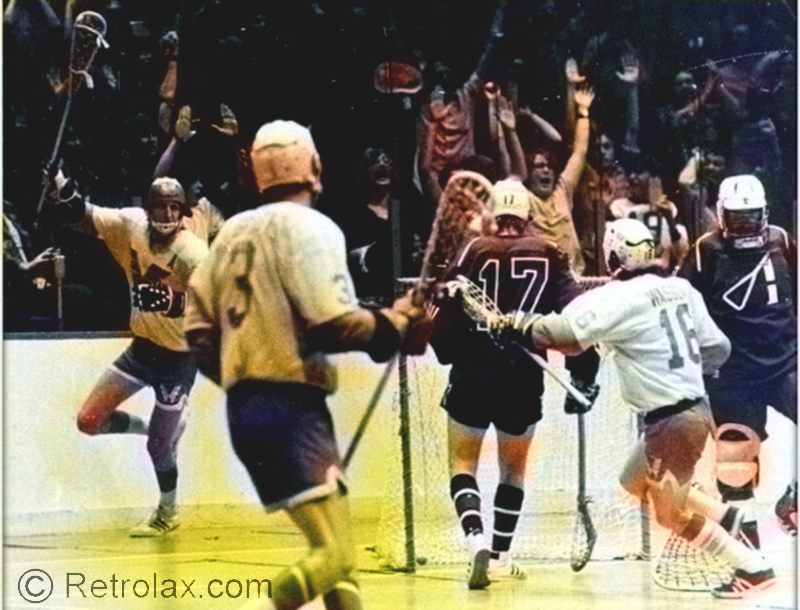
Photo courtesy of Tom Wersderfer
Patterson was entirely on his own last Friday, the day the board of governors of the NLL voted unanimously to cease operations. They met at the Airport Hilton, and by the time the press arrived for the post-mortem, everybody was on the first plane out of town.
All that remained of the league was the commissioner, publicity man Larry Riley and a large plate of tea sandwiches and French fries.
“Well, they let me have this room on credit,” Patterson joked. “So I guess my name is still good. I haven’t seen the banquet manager run in to grab the sandwiches. Maybe he hasn’t been listening to the radio.”
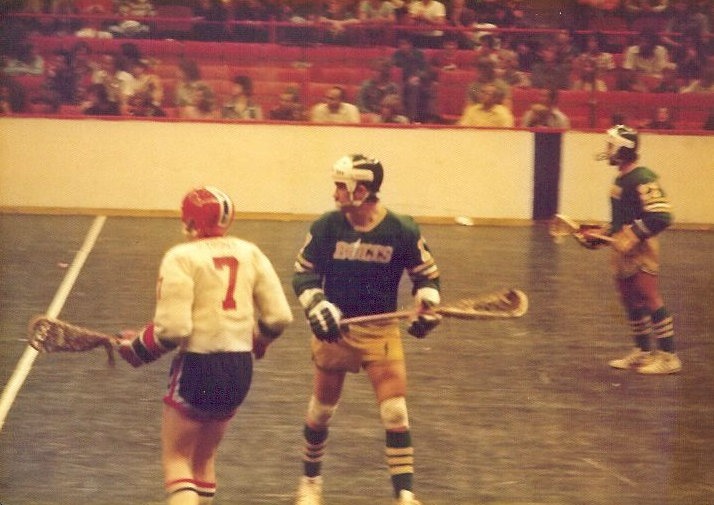
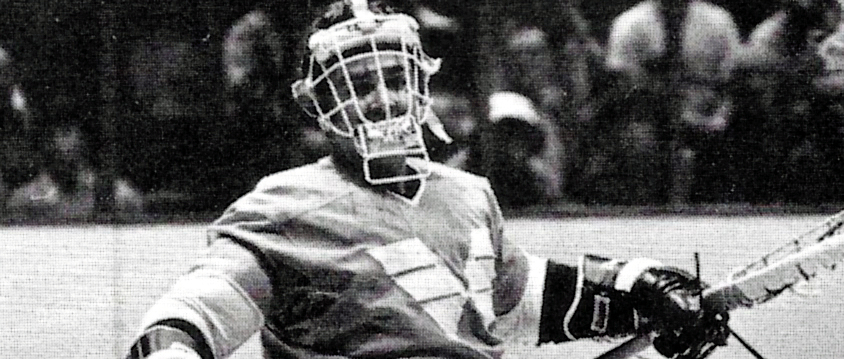
Photo courtesy of Tom Wersderfer
Died as it lived...
He probably hadn’t heard. The NLL died as it lived, underpublicized. Only four reporters showed up on the final day, a funeral’s afterlife, but the NLL at its height had 100 major headlines across newspapers and magazines, but the best that can be said in eulogy is that he died with dignity, unlike those leagues that committed suicide and died of neglect.
When it forgot Chris Hemmeter, the last commissioner of the unaltered World Football League, sending out a press release and taking off for his home in Hawaii, the land of no end zones.
“Unlike Mr. Hemmeter, I thought I’d face the press directly,” Patterson said.
Patterson probably cares not at all that he has set the standard of excellence in the field of failure. It is certainly an honor of dubious value, passing away, but there is something to be said for a man who does not fold his promises and slink away.
It is something that people like Dave DeBuschere of the American Basketball Association, Ben Haisuk of the World Hockey Association, and the King of World Team Tennis should keep in mind when their times come.
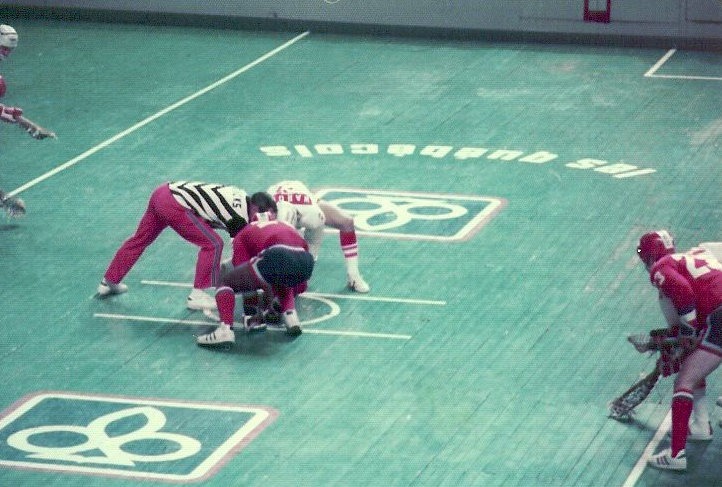
Photo courtesy of Tom Wersderfer
Montreal was key...
“But the key franchise was Montreal,” Patterson said. “One reason is that without Montreal, Quebec wouldn’t stay. They didn’t want to be only team in Canada, but we could have got investors together for Montreal, that would have given us more time to resolve the situations in Long Island and Boston.”
“Our deadline was February 15, because that was the day we had to make commitments to the arenas in Maryland and Philadelphia. During this meeting today (Friday) I was still taking phone calls from prospective (Montreal) investors, three of whom said no and two of whom said yes. We ended up with the team 60 per cent sold. It was that close.”
At the end of Friday, Patterson called the last member of the National Lacrosse League to order. There was a reading of the minutes of the last meeting, and then he made his opening calling for the discussion of the league’s future. After an hour of discussion, the motion passed.
“It wasn’t all that simple,” he said. “I just wish I had tape recordings of the planning meetings we had over the past two months. It would make a case study for the Harvard Business School.”

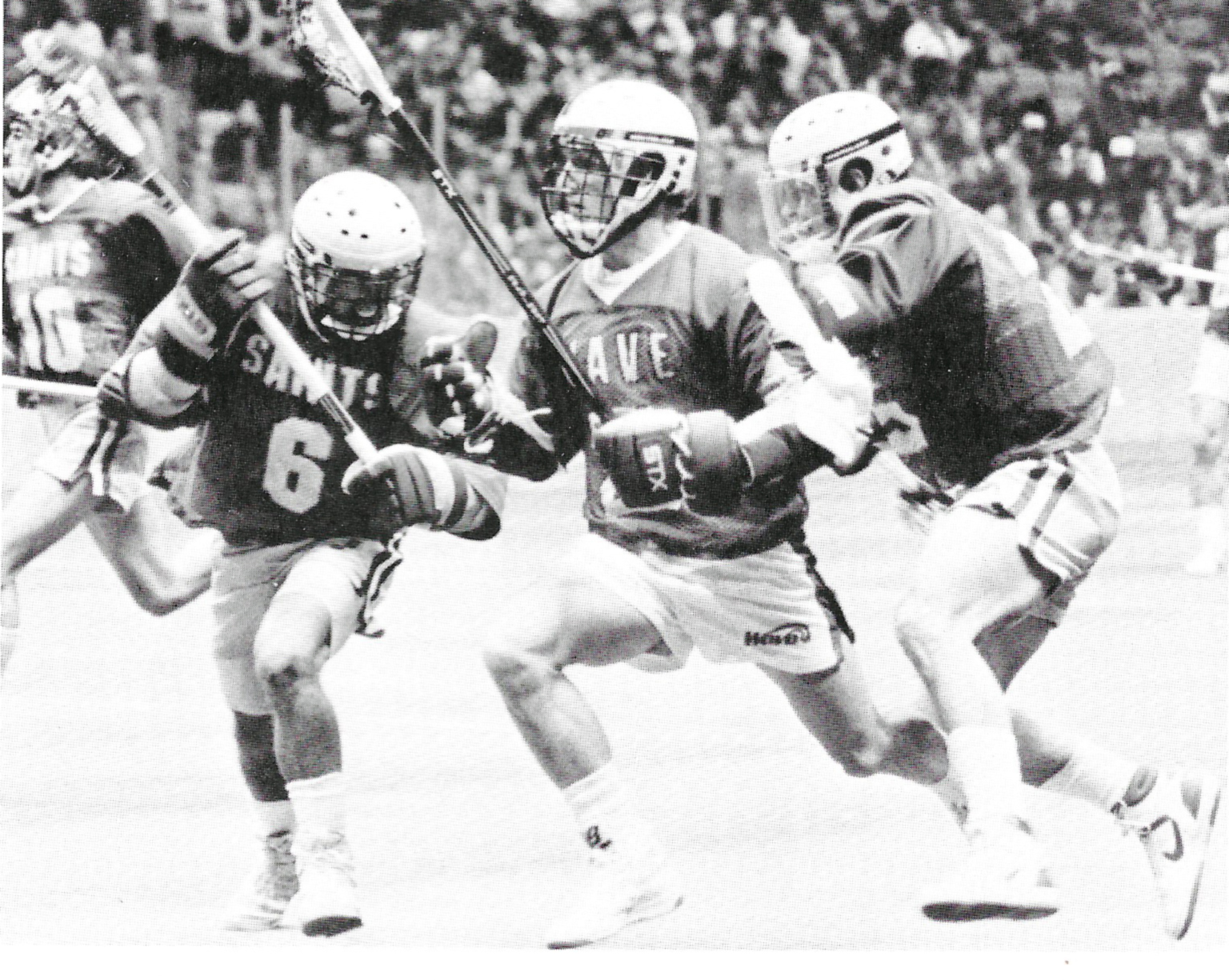
Photo courtesy of Tom Wersderfer
In two years of operation the league lost approximately $3.6 million for its owners, although a great deal of that money has been written off on income tax returns. Compared to the losses of the World Football League, which have been placed at $90 million, it is not an overstatement.
Eugene “Fitz” Dixon, the owner of the Philadelphia Wings, has a fortune conservatively estimated at $125 million. He lives in a 60-room mansion on a 300-acre estate, and the value of his personal possessions on his estate have been placed at more than $1 billion dollars. Certainly Eugene Dixon could put up the mere $160,000 remaining to be raised in order to operate the Quebecois next season.
“The team is coming in spirit,” Patterson said, “when the owners are no longer going to support the weak. Otherwise the strong will not remain strong. That is a realistic business approach.”
To put it another way, the great-grandfather of Fitz Dixon was one of the founders of the company that owned the Titanic. Maybe he learned his lesson.